How Long Do Moissanite Rings Last? What Fails First
Short answer: the moissanite is not the part that fails. Prongs bend and loosen, small stones work free of their seats, and a plated finish rubs through at the palm side. A ring lasts as long as its setting is looked after.
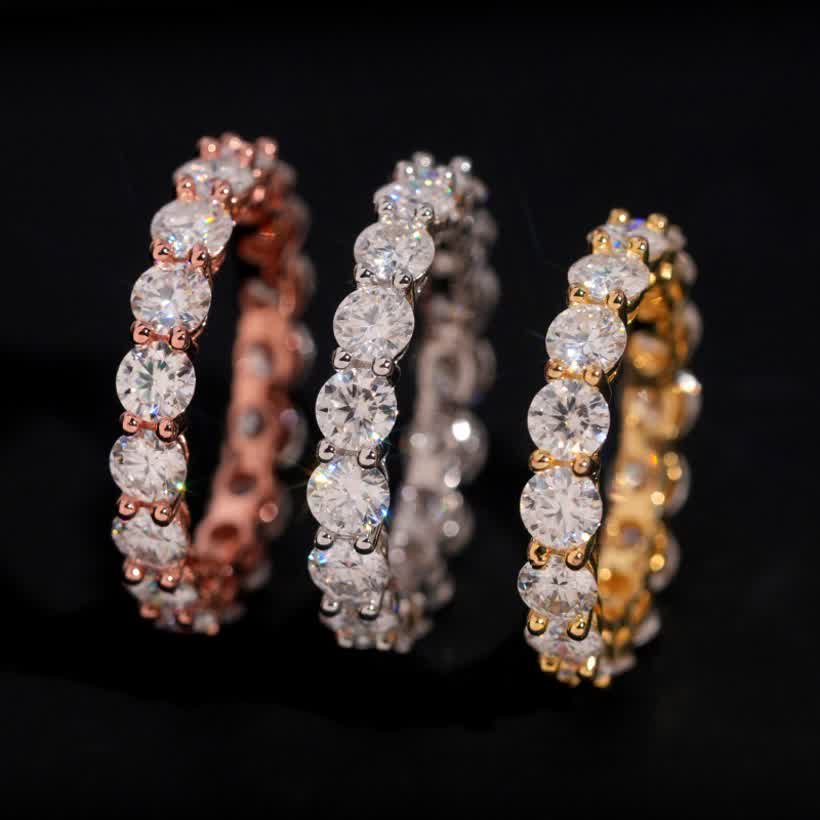
Below: the order things fail in, why a ring looks cloudy when the stone is sound, what our three bands at $119, $129 and $139 are built like, and a check you can run in a minute.
What fails first: prongs, then settings, then plating
A ring is a stone held by metal, and the metal is the part with a service life. Three things wear in a fixed order.
Prongs. A prong is a claw about a millimetre across, bent over the edge of the stone and polished to a round tip. It is thin on purpose — thin enough for a jeweller to re-bend in minutes — and that thinness is why it moves. A prong that catches a thread or a sleeve bends a fraction; bend it back and forth over a few years and the metal work-hardens, then cracks at the bend. The tip wears too, because it stands above the stone and meets everything first.
What you notice first is rarely a missing stone. It is a tip gone flatter and shorter, the stone sitting a little proud, then a tick under a fingernail. That tick is the warning: a stone moving in its seat grinds the metal beneath it and scuffs its own underside.
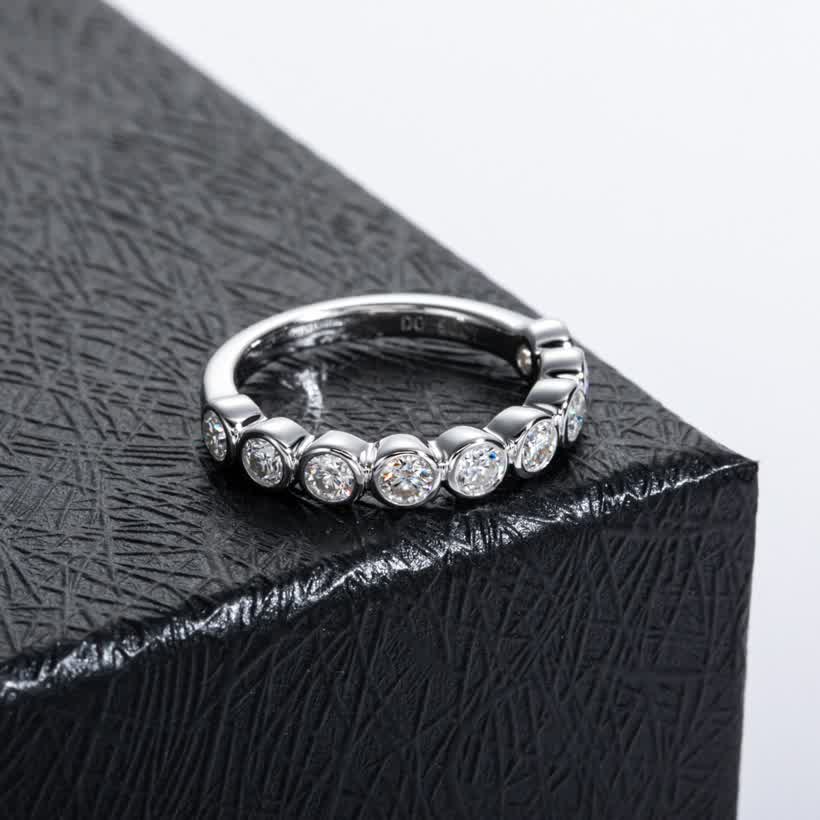
Settings. A bead setting — pavé — pushes a small bead of metal over the edge of each stone. Where a band is built that way, the bead is the smallest piece in the ring and was work-hardened when it was pushed, so it is the first to snap; on any band set all the way round there is a join at every seat.
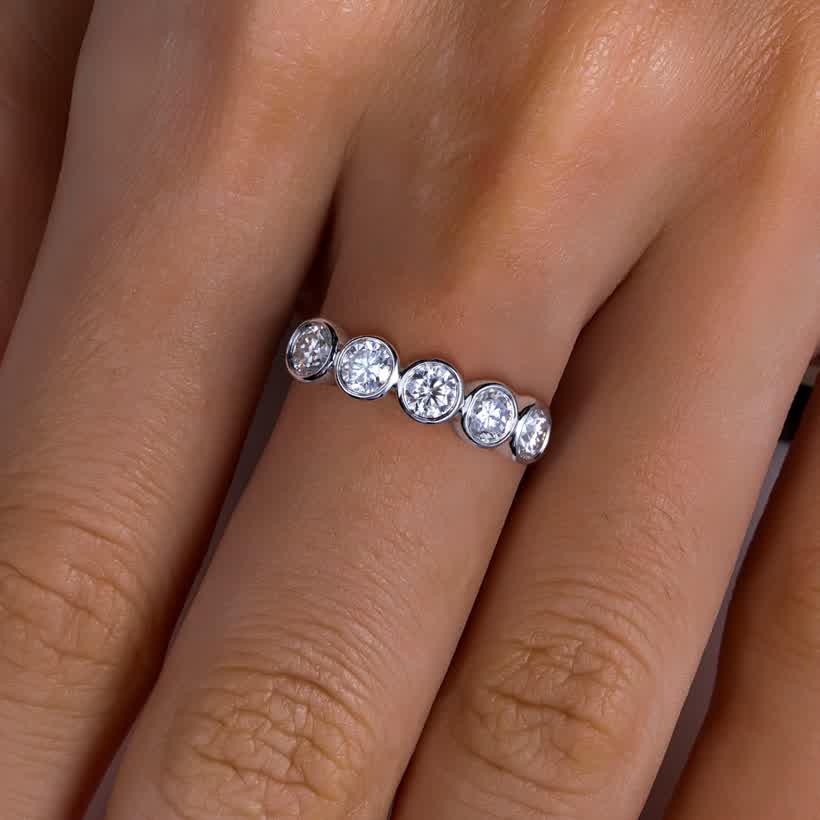
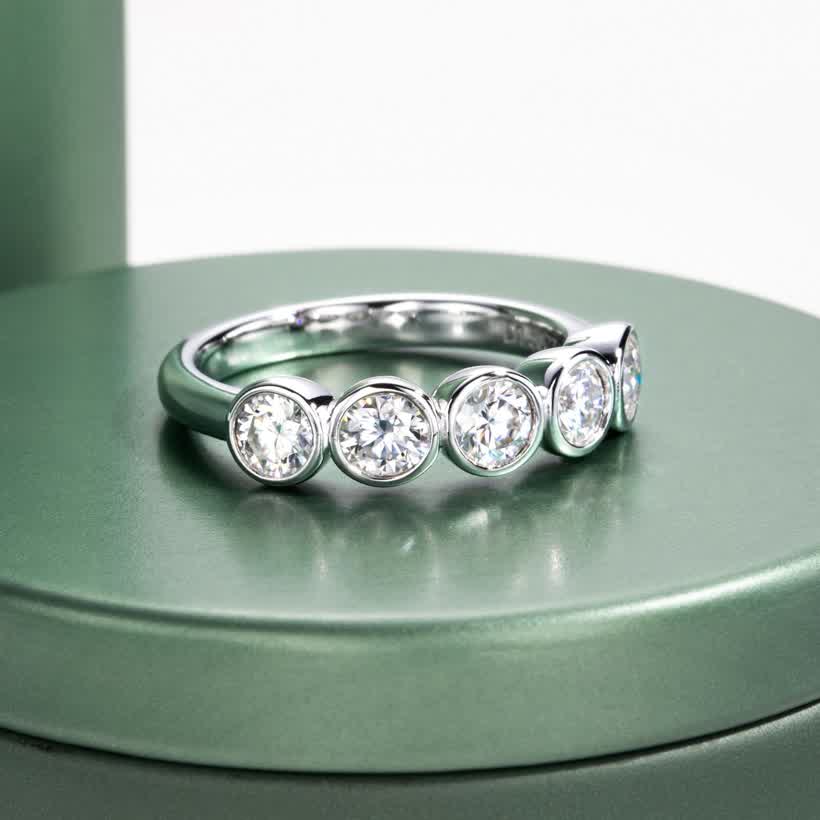
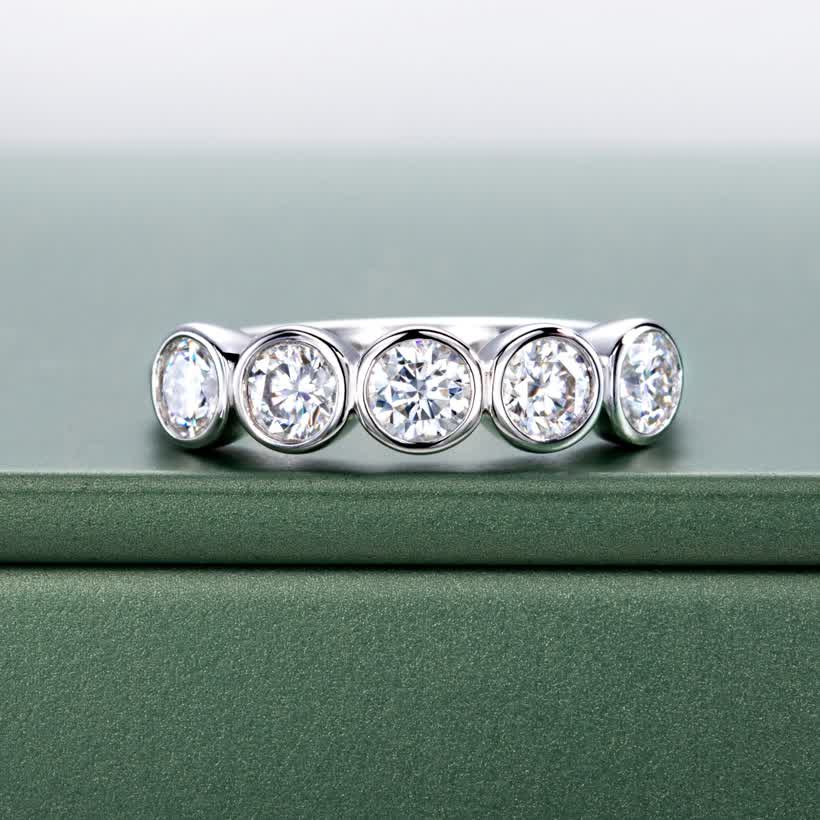
A rim setting wraps a continuous wall of metal around the girdle. No prong tips stand above the surface, so it survives sleeves and bags better. Its wear point is the rim, which thins against a finger over years and lets the stone sit a fraction lower — and a rim also hides the girdle, so a chip stays out of sight.
Plating. If the piece you are looking at is plated, the finish is a surface, and a surface goes where it rubs: the palm side, the shank edges, the high points of the setting. The metal underneath shows through and darkens on its own. The chemistry is in what actually tarnishes; for a ring, the short version is that the plating goes before the metal does.
Why a ring can look cloudy when the stone is fine
Most cloudy rings we are asked about have nothing wrong with the stone. The film is on it.
Skin oil, hand cream, soap and sunscreen collect on two faces: the crown, and the pavilion, the pointed underside that light passes through. A film there scatters light instead of returning it, and a stone that scatters reads grey. The second place is the seam between stone and seat, where residue hardens into a grey line a cloth cannot reach. The third is the metal: when a plated surface dulls between two stones, the row reads cloudy from arm’s length.
The fix is water. Warm water, one drop of washing-up liquid, a soft toothbrush, thirty seconds on the underside, rinse, dry on a lint-free cloth. No toothpaste and no bicarbonate, because both are abrasives; no ultrasonic bath on a ring with a loose stone. The routine is in how to clean a 925 silver necklace and works the same on a band.
One test separates the causes. If the dullness washes off, it was film. If it stays, look for a network of fine lines: that is abrasion, which is what happens to softer stones rather than to moissanite at 9¼ on the Mohs scale (Nassau et al., GIA Gems & Gemology, Winter 1997). If a stone sold as moissanite still looks dull when clean, check it rather than scrub it harder — how to test it at home, and the comparison with softer simulants in moissanite against cubic zirconia.
What our three bands are built like at $119, $129 and $139
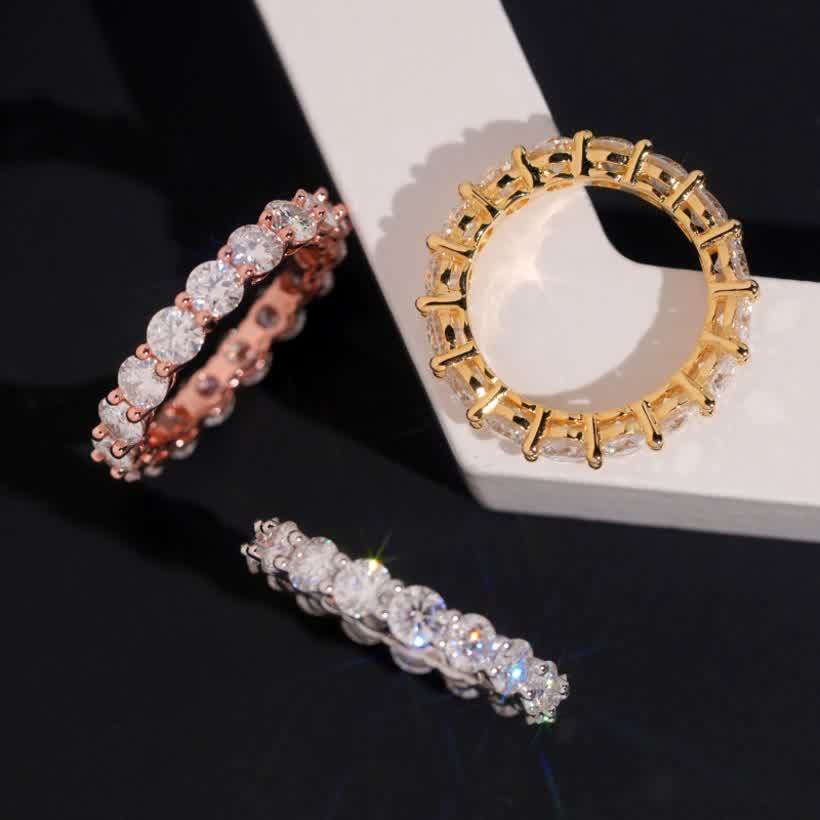
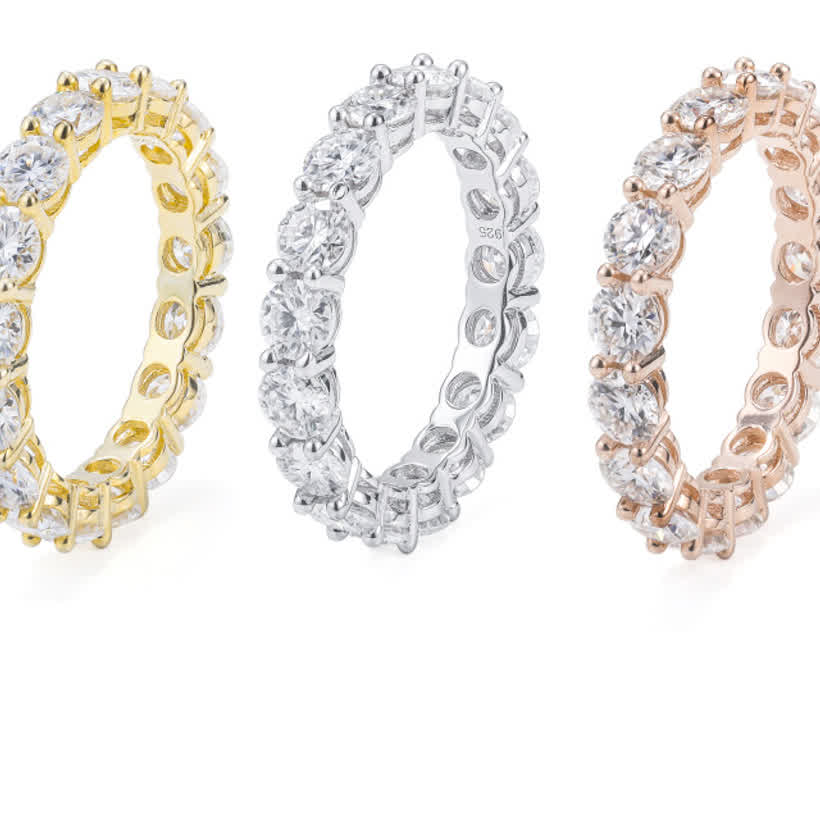
Three rings, one of each build: an S925 silver base with moissanite, hand-set to our spec. The pavé band comes in silver, gold colour and rose gold colour; the gold and rose gold are an electroplated finish over that silver base, not a solid gold alloy. The five-stone band and the solitaire are stocked in silver only. Within a style, every size is the same price.
| Ring | How the stone is held | Variants | Price | What wears first |
|---|---|---|---|---|
| 4 mm pavé eternity band NOV-RG-1030 | Small stones set edge to edge, metal between every stone (listed as pavé) | 12 (3 colours × US 6–9) | $119 | The metal between the stones, and the palm-side seats |
| Five-stone band NOV-RG-1054 | A metal rim around each stone, no exposed prong | 10 (silver, US 5–9.5) | $129 | The rim, where it is highest |
| Solitaire ring NOV-RG-1041 | One stone, four prongs, as its product page states | 6 (silver, US 5–10) | $139 | The four prong tips |
Variant prices from our own catalogue, read 23 November 2026, in USD. Each figure is the price of every variant in that style, not an average.
Read the table as a wear budget. The pavé band carries the most individual settings, so the most places to check, and its palm-side stones take the friction from everything the hand closes on. The five-stone band has no exposed prongs: five stones, each in a metal rim, in a row that slides under a sleeve. The solitaire trades the other way — one stone, four prongs, all of the exposure in one place, and the least work to inspect.
None of the three product pages names a plating process, so treat the finish as a conditional: if the colour you order is plated, it has a surface with a wear life, in the same three places on all three rings.
A 60-second check every six months
Daylight, a phone torch if the room is dim, twice a year on a ring worn daily — sooner if a sleeve catches on it.
| Step | Reads normal | Time to stop wearing it |
|---|---|---|
| 1. Rock each stone with a fingernail | No movement at all | A click, or a slide of half a millimetre |
| 2. Photograph the prong tips with a phone macro | Tips round and sitting on the stone’s edge | A tip flattened, sharp, or level with the stone |
| 3. Run a fingernail around each rim | Metal continuous, no lip | A gap, a burr, or a stone below its neighbours |
| 4. Turn the band to the palm side | One even colour round the shank | A dull patch, fine scratches in a line |
| 5. Brush the seam under each stone | The grey line lifts with the brush | A line that stays after washing and drying |
Two habits matter more than the check. Take the ring off for the gym, for cleaning products, for the garden and for a chlorinated pool: grit and chlorine do to a setting in an afternoon what a year of typing does not. And when a stone ticks, stop wearing the ring that day — a re-tip is minutes on the bench, a stone that has ground its seat loose is not.
Sizing decides whether a ring is serviceable at all: a solitaire or five-stone band usually can be sized, a band set all the way round cannot, which is why the pavé band comes in four sizes across three colours. What the numbers on a listing mean is in the ring cost guide, the stone itself in what is moissanite, and the range on all rings.
Frequently asked questions
How long do moissanite rings last?
The stone is not what sets the limit; the setting is. Moissanite measures 9¼ on the Mohs scale, so it is not the part that wears in normal use, while prongs, beads and rims are thin metal that bends, wears and can be re-tipped. There is no honest single number of years: a band checked twice a year and taken off for the gym outlasts the same band worn for everything.
Do moissanite rings get cloudy?
Usually the film clouds, not the stone. Skin oil, hand cream and soap collect on the pointed underside where light passes through, and a film scatters light instead of returning it. Warm water, one drop of washing-up liquid and a soft brush clear it in about thirty seconds. If a stone is still dull after a wash and a dry, the cause is abrasion on its surface.
Is moissanite hard enough to wear every day?
Hardness is not toughness. At 9¼ on the Mohs scale it resists scratching from desks, keys and door handles, but a hard knock on the edge of a stone can still chip it, and how much stone is exposed decides that. A rim setting wraps the widest part of the stone in metal; a prong setting leaves it proud.
Can a moissanite ring be resized?
A solitaire or a five-stone band usually can be, because the back of the shank is plain metal. A band set with stones all the way round cannot be sized without cutting through seats, so it has to be ordered in the right size — which is why the pavé band here comes in four sizes across three colours.
Does a gold plated ring turn your finger green?
It can leave a dark mark where the finish has worn thin and the metal underneath reacts with sweat and soap. That is the plating showing its wear, not the metal dissolving, and it is the same reaction that darkens silver left in a drawer. Cleaning helps; when the worn patch bothers you, a replate is the fix. The chemistry is in what actually tarnishes.
Tell us how you wear it and we will name the setting
Send a photo of your hand, say whether the ring is for daily wear, and we will tell you which of the three builds suits it — and what that piece costs in the size and colour you want.
Ask on WhatsAppNotes on this page
Prices are variant prices read from our own catalogue on 23 November 2026, in USD. The three rings named here are an S925 silver base set with moissanite, which is silicon carbide and carries no gem-lab clarity grade. Gold colour and rose gold colour mean an electroplated finish over that silver base, not a solid gold alloy; none of the three product pages names a plating process, and not every style is offered in every colour. Construction descriptions are of the setting types, not a measurement of any individual piece. Wear rates depend on how a ring is worn, so nothing here is a promise of a service life. The Mohs figure for moissanite is from GIA, Gems & Gemology, Winter 1997.
Shop the Rings in This Guide
Made to our spec in China — stones hand-set.
Where these pieces come from
Everything here is made and set on our own bench in Guangzhou — 925 sterling silver and moissanite, with gold-tone plated alloy watch cases where the listing says so. If you are buying for a store, a brand or a reseller, the wholesale pages carry the minimums, lead times and terms:
- Cuban link chains — wholesale
- Moissanite jewelry — wholesale
- Custom iced out watches — wholesale
- Private label & brand manufacturing
Retail pieces in the same workshop: 16mm Cuban link chain · 18mm iced Cuban chain · RAM iced out pendant · Iced out square-case watch