Diamond Jewelry Trends 2026: 7 Looks That Are Selling
What is selling in 2026: coloured gemstones, heavy gold-toned chains, iced-out pavé, lab-grown diamonds at maturity, and plated gold as the substitute buy. Eight real prices follow, from $29 studs to a $969 chain.
This page replaces our August version, which carried estimates in its price table. Every number below is a variant price read from our own catalogue on 16 November 2026, and the photographs are the pieces themselves. Seven trends, each with the report behind it, then what it costs and whether it is worth it.
Trend 1: Colour leads, and it is not a niche anymore
At JCK Las Vegas in May and June 2026, the trade's largest show, coloured stones were the busiest category on the floor — emerald, ruby, sapphire, spinel, Paraiba tourmaline. Yellow gold, heavy chain, sculptural metal and the bezel setting all strengthened in the same week, while lab-grown was described as having reached maturity and selling alongside natural rather than instead of it (Rapaport, “Volume, Gold and Easy Wear: What’s in Store at JCK”; thejewelrygossips, JCK 2026 recap).
Jewelers Mutual’s 2026 forecast picks up the same shift from the design side: organic, fluid shapes replacing angular ones, and coloured stones reset into open, minimal, architectural mountings (Jewelers Mutual, “2026 Jewelry Trends Forecast”).
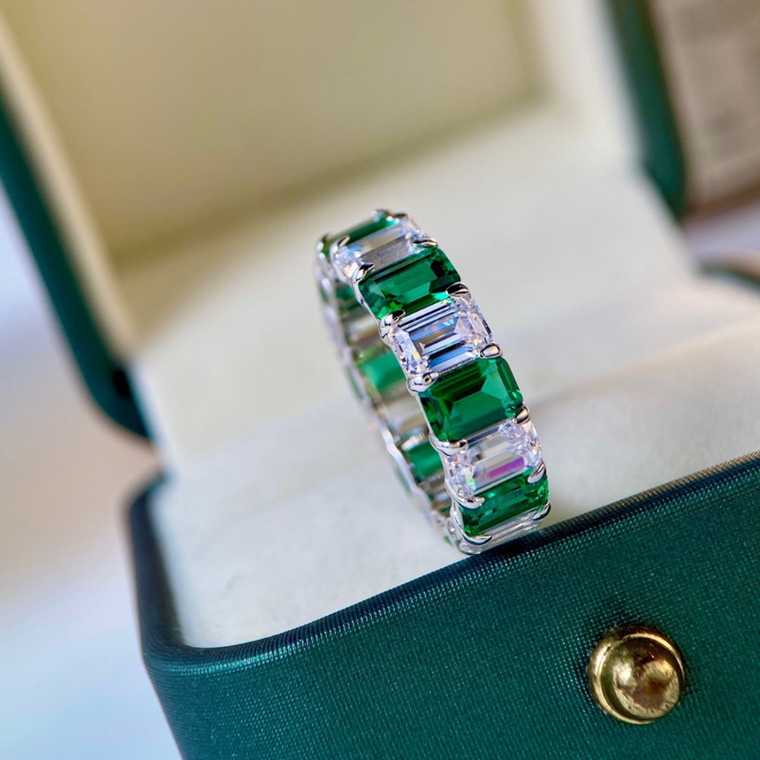
What it means when you are buying: a coloured stone no longer implies an estate piece or a four-figure budget. Our emerald-green moissanite band ring is $219 — green emerald-cut moissanite alternating with white rectangular stones on a silver band — and it reads as 2026 without reading as costume (NOV-RG-1076). US sizes 5 to 8, and the platinum, rose gold and gold finishes cost the same $219.
Trend 2: Heavy chain, yellow-toned metal, and the silver workaround
Two reports point at the same wall. JCK 2026 put yellow gold and heavy chain at the centre of the show. INSTORE’s Big Survey 2026 then found 94% of jewellers naming gold price volatility as the biggest single hit to their business — which is why the trade’s own answer to “what breaks out next” was gold alternatives: silver, plated gold, two-tone (INSTORE, Big Survey 2026).
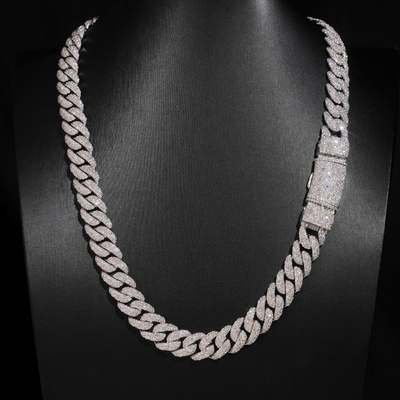
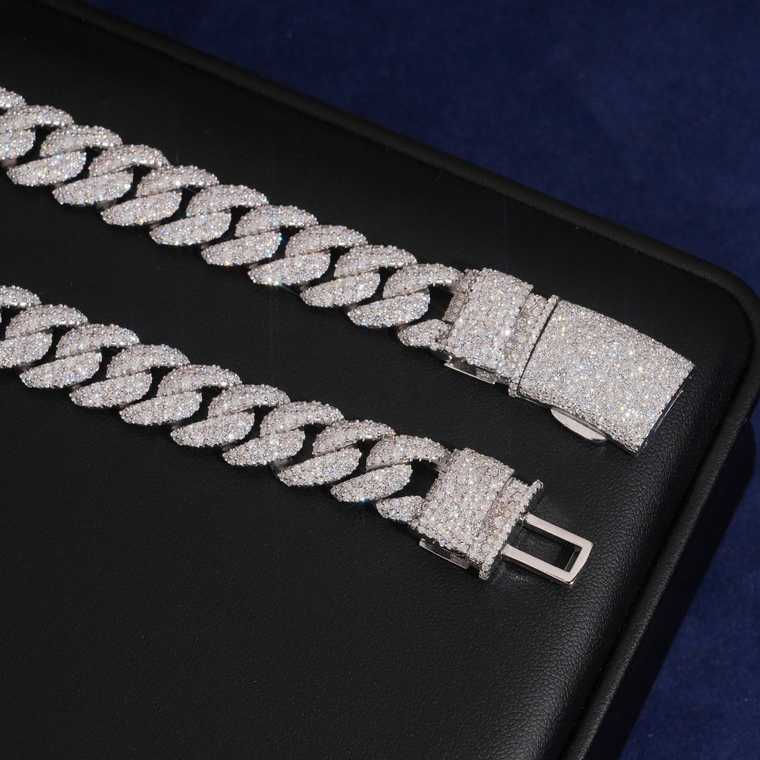
That is the honest argument for a heavy chain in silver. Ours is 12mm, pavé-set, 925 sterling silver, in seven lengths from 7 to 24 inches: $419 at 7 inches, $969 at 24. The gap is metal and labour, not stones — a longer chain carries more links, so it carries more setting too.
Buy the length you will wear, not the length that photographs best. If a chain feels light in the hand, it is not the same chain at a lower price. Twenty inches sits at the collarbone on most men and disappears under a collar; 24 is the outer layer. If you plan to layer, start short and add (chain length guide). The full breakdown of what drives cost is in moissanite Cuban chain cost.
Trend 3: Iced-out stopped being a rap video
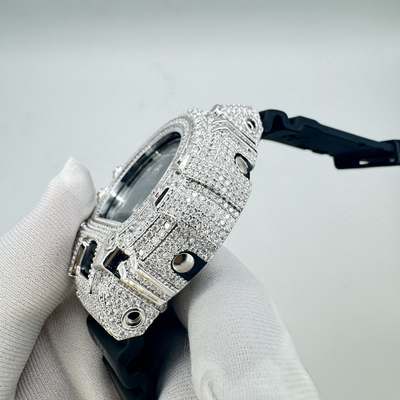
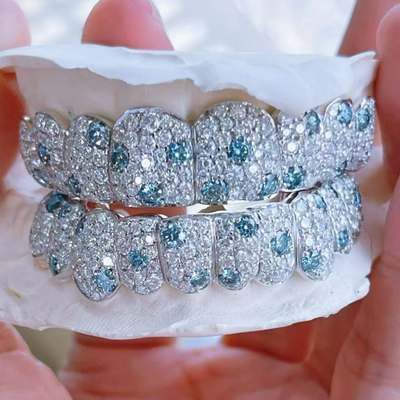
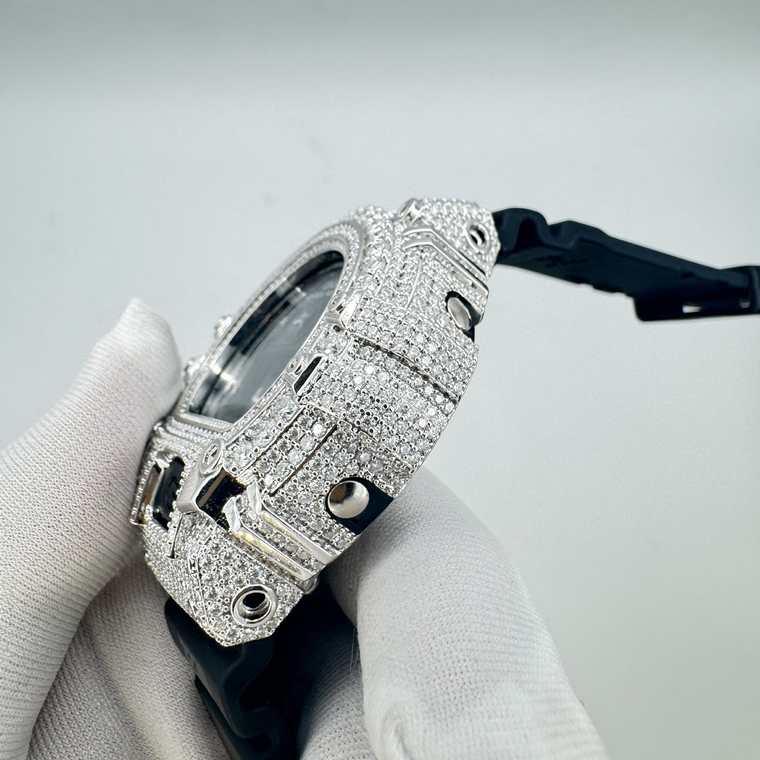
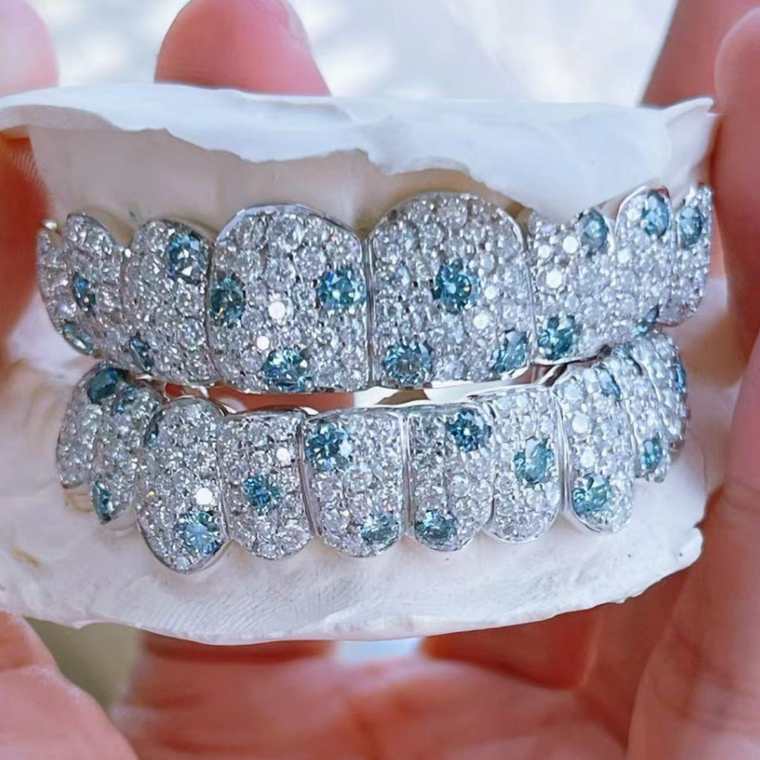
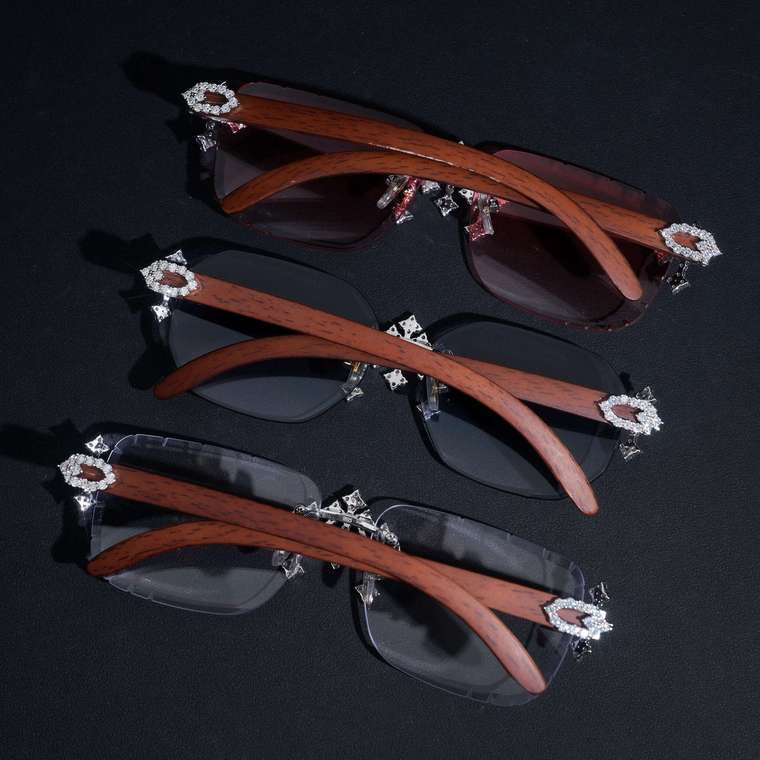
The iced look — a whole surface of small stones set edge to edge — has moved off video sets into ordinary dressing, and its price ladder is short, with the useful steps in unexpected places. Our watch case is $239 for the case alone and $589 with the watch inside it. Those are two products, not a range: the difference is a genuine Casio G-Shock DW-6900 inside it. The grillz are $560 for a full 8 top and 8 bottom set, 16 teeth, and platinum, gold and rose gold finishes all cost the same. The sunglasses are $279 in one specification, pictured above in several lens tints.
Honest take: the watch case is the best value in this category, because paving a case changes the silhouette of a watch you may already own, and the price is a case rather than a watch. The grillz get the most attention and the fewest wears — buy them for a night, not a season. Costs for the other shapes are in iced-out watch cost and grillz cost.
What changed is who wears it: a paved watch case or stone-set sunglasses now turn up on people who would never wear a chain, which is why the category kept a low entry point.
Trend 4: Lab-grown grew up, and natural pushed back
This is the trend with the most noise and least precision, so here are the numbers with sources.
Demand split, not collapsed. De Beers’ 2026 US consumer survey found natural diamond still the most-wanted luxury purchase, chosen first by 11% of women, against 8% for lab-grown, 5% for other coloured stones and 4% for plain gold. Point-of-sale data from 950 independent US retailers showed natural diamond sales up 4% year on year in Q4 2025 and up 9% in Q1 2026; lab-grown was about 15% of those stores’ diamond sales by value, and lab-grown above 3 carats was falling away (De Beers Group, 2026).
Price is still the whole argument. Lab-grown costs up to roughly 90% less than a comparable natural stone. In 2025, 61% of engagement rings bought had a lab-grown centre stone, and the lab-grown market was $29.46 billion, projected at about $92 billion by 2034 (CNBC, 26 September 2026, citing The Knot 2026 Real Weddings Study and Fortune Business Insights).
The finished-jewellery numbers agree. In 2025 finished natural-diamond engagement rings sold 4% less while finished lab-grown sold 31% more, and more than half of engagement rings now carry a lab-grown centre (National Jeweler, “Engagement Ring Trends 2026”, citing Edahn Golan; The Knot puts it at 61%).
Neither survey decides what you should buy.
How to decide, in one line: if the stone is the point and paperwork matters, buy a diamond and budget for it. If the look is the point, the stone can be something else — a choice, not a compromise.
Where we sit: we sell neither. Not natural diamond, not lab-grown diamond. If a diamond is what you want, buy one from someone who sells them and ask for the report — the arithmetic is in is lab-grown worth it. This page exists for the layer underneath: the look, in moissanite, at a price that does not need financing.
Trend 5: Moissanite’s position changed — the brand died, the stone did not
Charles & Colvard, the company that spent two decades marketing moissanite as a brand, filed Chapter 11 on 2 March 2026 with $19.2 million in assets against $10.5 million in liabilities, after revenue fell to $16 million in FY2025 from $22 million the year before. On 25 June 2026 a court approved the sale of its assets to AJS Creations for $2.7 million, after an opening stalking-horse bid of $1.5 million (JCK and National Jeweler, March 2026; JewelersTrend, June 2026).
Read the failure correctly. A brand failing is not a stone failing. Moissanite is silicon carbide, grown in laboratories, and no single company can own its price because many cutters produce it. What you pay for is the cut, the setting and the metal — not a licence. The material itself is explained in what is moissanite.
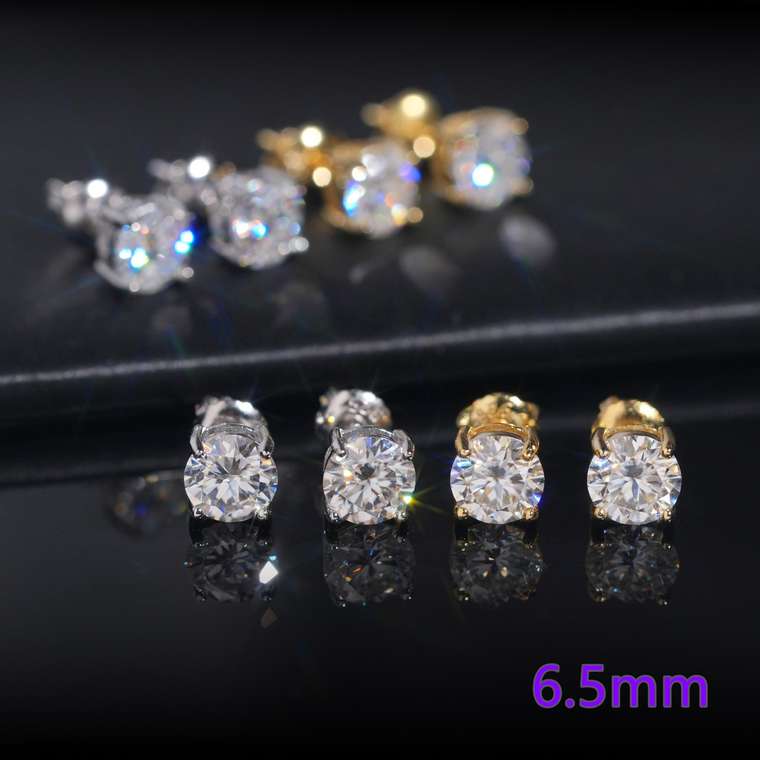
What that means at the bottom of the ladder: our four-prong round studs start at $29 a pair from 3.0mm to 5.0mm, $39 at 5.5mm, $49 at 6.0mm and 6.5mm, and climb to $159 at 11.0mm across thirteen sizes, with the silver, gold and rose gold pairs at the same price per size wherever that size is made in that colour. It is the cheapest honest entry into the category, and it is the piece we recommend first.
What we will not claim: resale. Moissanite has no meaningful secondhand market, and anyone telling you otherwise is selling. If holding value matters, this is the wrong stone. The three-way comparison with cubic zirconia and lab diamond is in moissanite vs CZ vs lab diamond.
Trend 6: Silver and plated gold moved up the shelf
INSTORE’s 2026 Big Survey found 92% of jewellers now selling lab-grown, and when asked why customers choose it, 52% named price and affordability first. The same survey put gold volatility as the top business problem at 94%. Put together: the trade is selling, out loud, a cheaper stone in a cheaper metal. (INSTORE, Big Survey 2026).
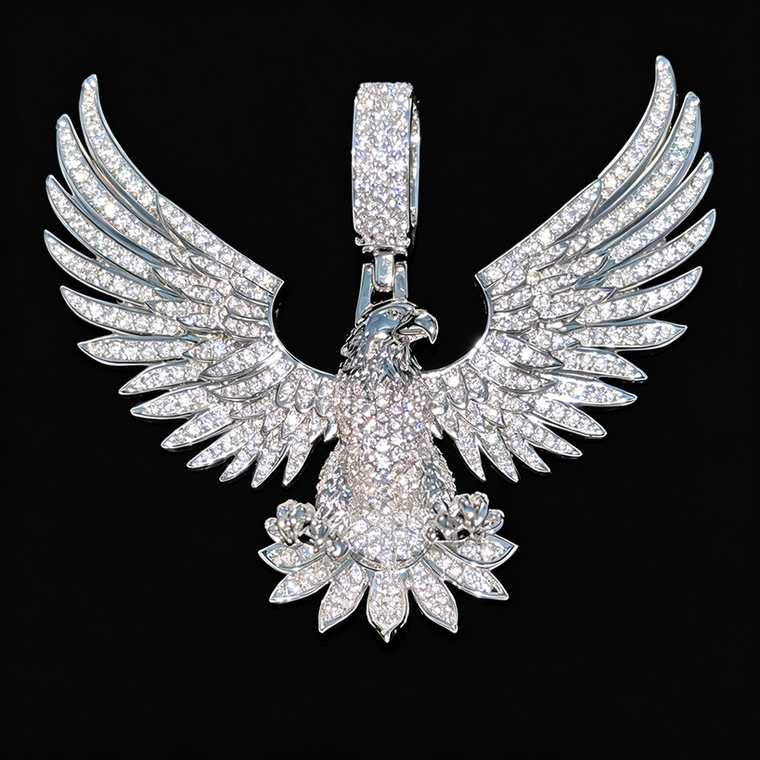
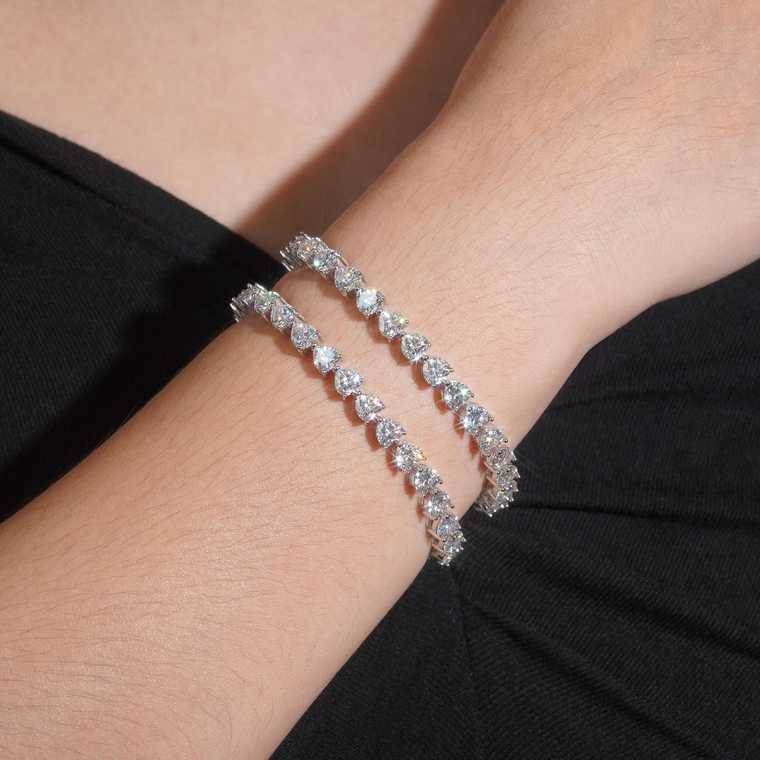
Almost everything we make starts in 925 sterling silver. Where a piece is gold or rose gold, that is a gold-tone plated finish over silver — plated, not solid — and it will wear first at the points that rub. The eagle pendant shows the metal ladder plainly: $119 on a copper base, $329 in 925 sterling silver, same design and same stones at both prices. The heart bracelet is $259 at 6 inches and $349 at 8, five lengths in all.
On care: silicon carbide does not tarnish, but the silver under it can darken and a plated finish thins with wear. Dry the piece before it goes back in a box and keep perfume off it — the detail is in does moissanite tarnish. Bracelet pricing by length is in tennis bracelet cost.
Trend 7: Personalisation, and a story you can point at
Thejewelrygossips’ JCK 2026 recap named personalisation and storytelling among the show’s clear directions: buyers asking who made a piece and for whom, not only what it costs. Our version of that is unglamorous. Standard sizes and standard lengths ship from our Guangzhou workshop; anything cut to your length, size or finish is made after you order it. A ring offered in four US sizes and three finishes at one price is personalisation at the production end: the size is cut for you, the finish is chosen by you, and neither moves the number (NOV-RG-1076, $219).
The caveat is time. Made to order means days rather than same-day dispatch, and a custom length means a conversation before a shipment. If you need it by Friday, say so at the start and we will tell you whether it is possible instead of taking the order.
Personalisation also means asking for what is not on the page: a length, a stone colour, a finish not in the dropdown. Ask for the length in inches and the finish by name, and you will get a straight answer.
What these looks actually cost
Eight pieces, one per category, at the variant price read from our catalogue on 16 November 2026. USD, stones set.
| Piece | Code | What you get | Price |
|---|---|---|---|
| Cuban link chain, 12mm | NOV-CH-9856 | Seven lengths, 7 to 24 in | $419 (7 in) – $969 (24 in) |
| Watch case, full pavé | NOV-WA-1020 | Alloy case, platinum finish; two variants | $239 case only / $589 with watch |
| Grillz, 8 top 8 bottom | NOV-GR-030 | 16 teeth, three finishes | $560 |
| Eagle pendant, spread wings | NOV-PD-1059 | Copper base or 925 silver | $119 copper / $329 silver |
| Emerald-green moissanite ring | NOV-RG-1076 | US 5–8, three finishes | $219 |
| Heart tennis bracelet | NOV-BR-1016 | Five lengths, 6 to 8 in | $259 (6 in) – $349 (8 in) |
| Iced-out sunglasses | NOV-EW-11 | One specification | $279 |
| Round stud earrings | NOV-EA-9992 | 13 sizes, 3.0–11.0mm | $29 (3.0mm) – $159 (11.0mm) |
Two lines to read carefully. The watch case is two products, not a range: $239 is the case on its own, $589 is the case with the watch inside it. The stud earrings run one 13-size ladder in nine price steps: $29 covers 3.0mm to 5.0mm, $39 at 5.5mm, $49 at 6.0mm and 6.5mm, rising to $159 at 11.0mm.
Frequently asked questions
What jewelry is trending in 2026?
Coloured gemstones, heavy gold-toned chains, iced-out pavé, lab-grown diamonds sold alongside natural, and silver or 18K gold plated pieces standing in for solid gold. JCK 2026 put coloured stones first; INSTORE named silver and plated metal next.
Are diamonds still popular in 2026?
Yes, split by buyer rather than by year. De Beers' 2026 US survey found natural diamond the most-wanted luxury, picked first by 11% of women against 8% for lab-grown, and 950 US retailers showed natural sales up 4% in Q4 2025, 9% in Q1 2026.
Is lab-grown worth it in 2026?
If you want a diamond and budget is the limit, yes: up to 90% less than natural, and 61% of 2025 engagement rings had a lab-grown centre. Resale is thin, and neither is what we sell — our stones are moissanite.
What is the cheapest way to get the iced-out look?
A paved watch case is $239, case only, or $589 with a watch. Then the chain: our 12mm Cuban link is $419 at 7 inches, $969 at 24. Stud earrings at $29 are the cheapest entry.
Does moissanite look like a diamond?
At arm's length, to most people, yes, which is why it is used for iced-out work. It is not a diamond: moissanite is silicon carbide, diamond is carbon, so hardness and price differ, and it is not graded on the diamond scale.
Tell us the look and the length
Send a photograph or name the code from the table, and we will quote it in 925 sterling silver or a gold-tone plated alloy case, moissanite set in our workshop — stone, setting and finish in one price. If it is not for you, we will say so.
Ask on WhatsAppSources
Sources: Rapaport, “Volume, Gold and Easy Wear: What’s in Store at JCK”, the JCK 2026 recap (2026); Jewelers Mutual, 2026 Jewelry Trends Forecast; De Beers Group, US consumer survey (2026); CNBC, 26 September 2026, citing The Knot 2026 Real Weddings Study and Fortune Business Insights; National Jeweler, Engagement Ring Trends 2026, citing Edahn Golan; INSTORE, Big Survey 2026; JCK and National Jeweler, March 2026; JewelersTrend, June 2026. Figures as published; prices ours, live catalogue 16 November 2026, USD, stones set.
Shop the Pieces in This Guide
Made in our Guangzhou atelier — 925 sterling silver (watch cases: gold-tone plated alloy), moissanite set in our workshop.