What a Diamond Tester Really Measures on Moissanite
Short answer: a tester measures how fast heat leaves its tip. Moissanite carries heat as fast as diamond does, so the pen lights DIAMOND — a threshold on a screen, not the identity of the stone.
This is the third page in our tester series. The first asked whether moissanite passes a diamond tester; the second ranked three checks you can run at home. This one is about the instrument: what it samples, why one stone reads twice, and where a reading stops.
The pen measures heat, and it only has two answers
A thermal tester warms a small tip and presses it to the stone; a sensor watches how fast that warmth drains away. Materials carry heat at different rates, so the drain carries one bit of information: faster than the reference, or slower.
The pen compares that rate against a built-in threshold and lights one end of its scale. Strictly, it never says diamond. It says above threshold, and the word beside the lamp is shorthand for what usually sits above it. Which is why, before recording a reading, ask what exactly was measured.
The International Gem Society puts it simply: a diamond tester will only test positive for diamond and moissanite.
Do diamond testers work on moissanite?
Yes, in one direction. A heat pen rejects cubic zirconia, glass and most simulants, because they carry heat far more slowly than the threshold expects. That screening is useful and costs nothing — the only reliable thing a basic pen does.
It cannot confirm moissanite, and cannot separate moissanite from diamond. Silicon carbide and carbon sit in the same league for heat conduction. IGI calls the result a false positive on moissanite: diamond and moissanite are similar in how they interact with heat.
SSEF reached the same place: the material's conductivity overlaps diamond's so closely that it cannot be distinguished with a thermal probe.
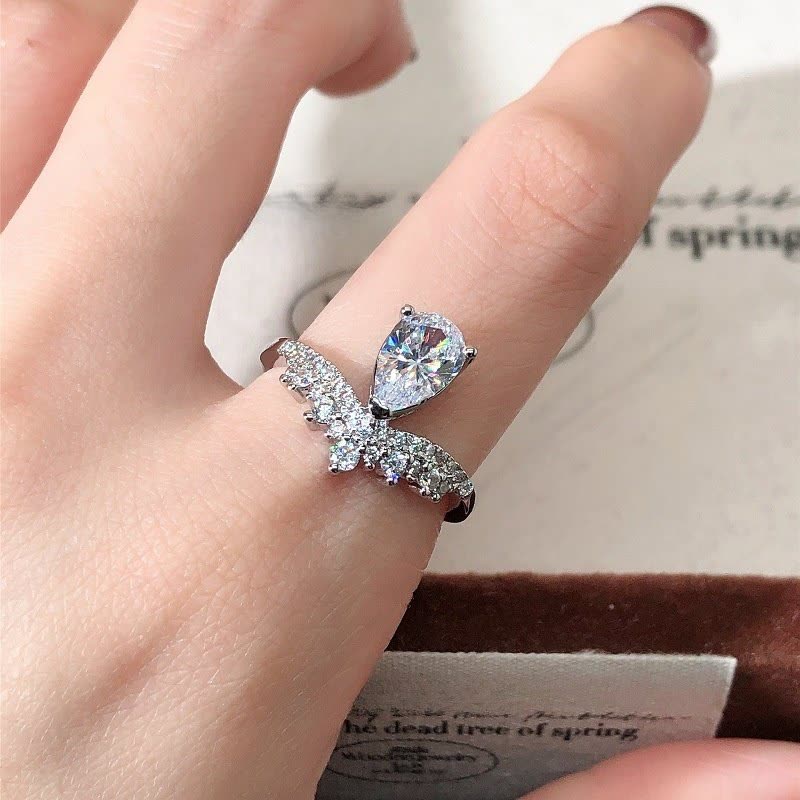
Why the same ring reads differently twice
Five things move a reading, and none of them is the stone changing.
The tip lands on metal
Prongs, a basket, a chain: metal carries heat away faster than any stone here, so contact pulls the reading up. You will see a lamp jump to the top, stay while the tip rests on the setting, and fall when you lift it.
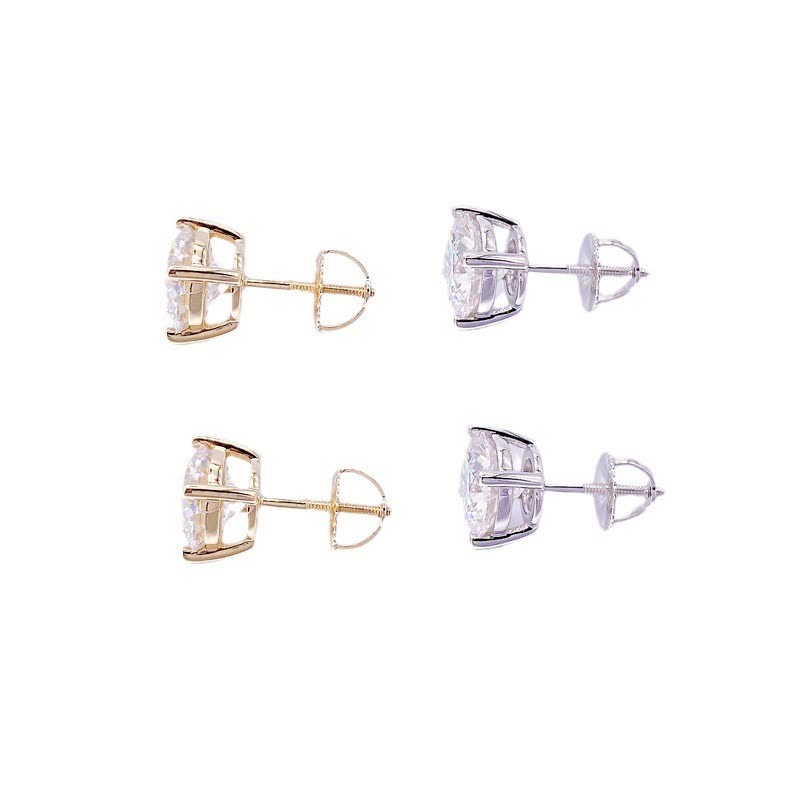
The stone is small
The tip is wider than the stone, so its rim sits on the setting, and a small stone sheds heat into the metal. You will see two studs from one pair reading differently, or a low reading on a stone that is fine. Our studs run 0.1ct to 5ct; the small end is hard to read.
There is a film you cannot see
Hand cream, skin oil, a fingerprint on the table facet: all insulate. You will see a reading one or two lamps lower than yesterday. Wipe it and read again.
The instrument is not in condition
A low battery, a cold probe, a draught from a vent: all pull readings down. You will see a reading that starts low and climbs, or a stone that reads differently under a vent.
Pressure, angle, a still hand
A tilted tip, or pressure hard enough to rock, loses contact. You will see a flickering bar, or a number that changes when you shift your grip. Flat, light, straight down, held still.
Reading the lights on a moissanite tester: DIAMOND, MOISSANITE, CZ, REFER
A basic pen has one row of lamps and a single top mark, often DIA. There is no moissanite lamp, because it has no second measurement to drive one: both materials light the same end of the row.
Multi-testers add conductivity, and with it a separate MOISSANITE indication. Silicon carbide conducts; most diamond does not. IGI notes exceptions both ways: some lab-grown stones carry metallic residues, and stones containing boron can read as moissanite.
CZ means a poor conductor, which is what the pen rejects. REFER is the machine declining to decide: bad contact, a stone too small, a dirty surface. Treat it as a request to try again, and read the instructions for the unit in your hand.
Moissanite diamond tester results, side by side
Four instruments, four questions: what each samples, and what it cannot finish.
| Instrument | What it measures | Diamond | Moissanite | Cubic zirconia (CZ) | What it cannot tell you |
|---|---|---|---|---|---|
| Heat pen | How fast heat leaves the tip | Above threshold | Above threshold | Below threshold | Cannot separate diamond from moissanite |
| Multi-tester | Heat, then conductivity | Passes, not conductive | Flags as moissanite | Below threshold | Cannot grade the stone or flag treatment |
| 10x loupe | Whether light splits into two rays | Single refraction | Double refraction | Single refraction | Can rule a stone out, never in |
| Laboratory | Molecular spectrum | Report | Report | Report | Costs money, needs the piece sent in |
Heat conduction is qualitative on purpose: the useful fact is the ranking, which the threshold depends on. The loupe row is a different property, and the three-way comparison sets out the difference.
A reading is not a report
A reading is an opinion formed in a moment: one person, one instrument, one property, one stone. A laboratory report is a signed document about that stone, using spectrometry and refractive index.
A report describes the stone, not the setting, the metal or the finish. Those are listing facts. Plating is a finish, not a material: 18K gold plated means a layer over 925 sterling silver.
The hierarchy is honest. A loupe check is a good guess; a pen reading is one property; a counter check is an opinion; a report is a document. None is the next in disguise.
What we do with a tester here, and what we will not do
We keep a thermal pen in the studio. It catches a stone that does not belong in a parcel, and explains a lamp to a customer.
We do not sell with it. No listing of ours offers a reading as proof: on a moissanite piece the top lamp says only that the stone carries heat well — the one thing everyone knew. Moissanite is the material; 925 sterling silver, the metal; where a piece is gold-toned, that tone is 18K gold plated over the silver. If you need the paperwork that came with your piece, ask with the order.
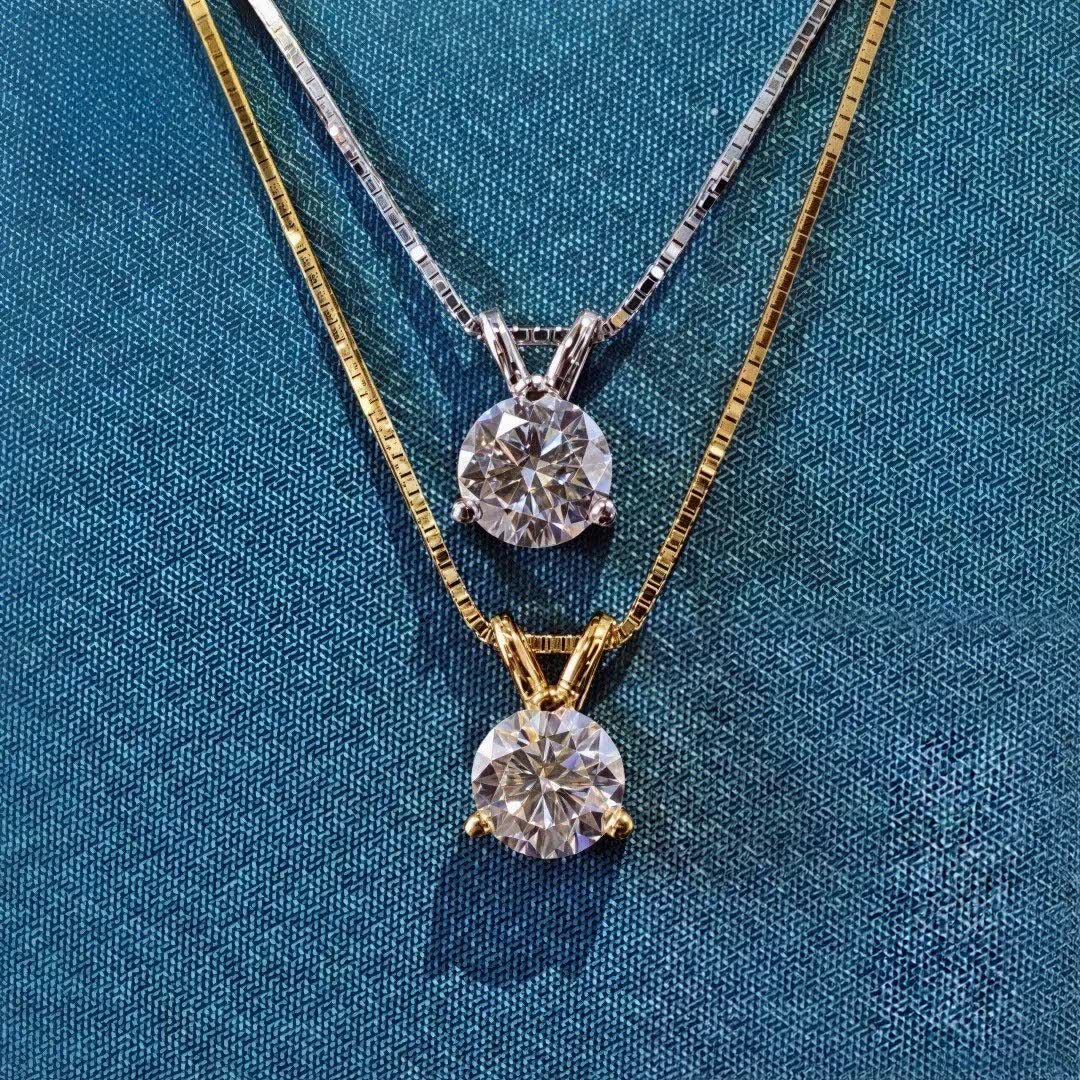
Testability varies, and it pays to know before you buy. A solitaire pendant reads cleanly. Small studs read badly. A fully set chain cannot be read stone by stone at all.
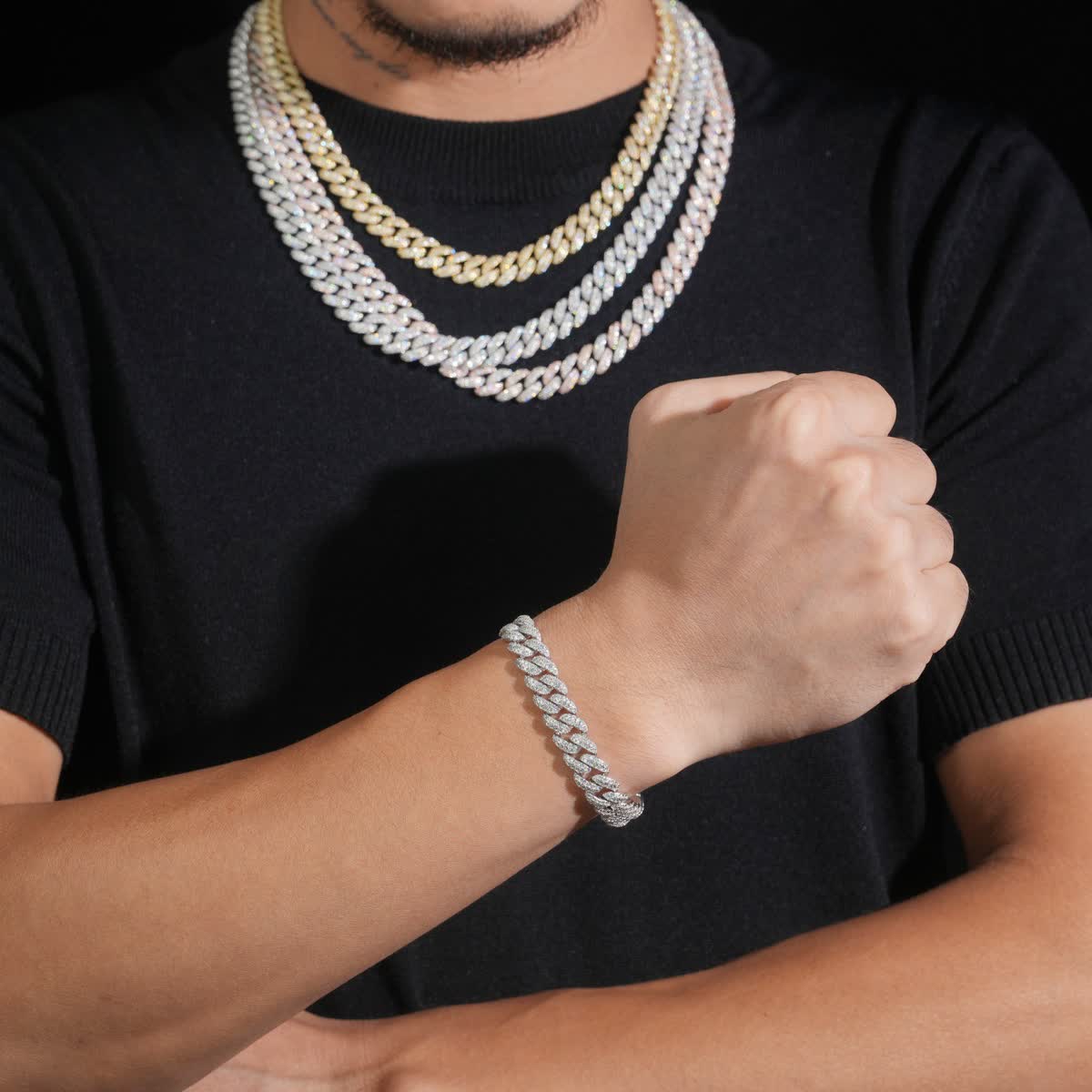
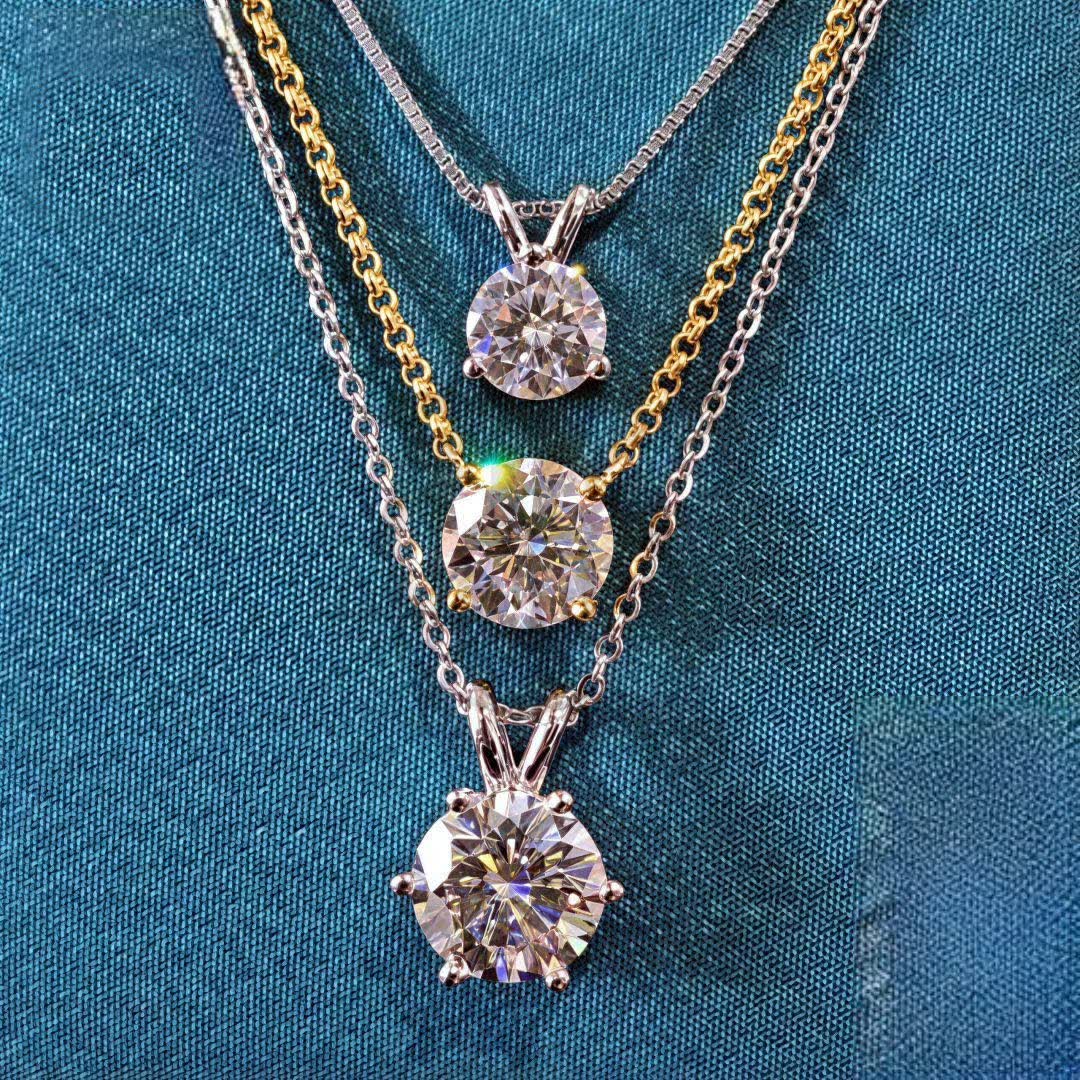
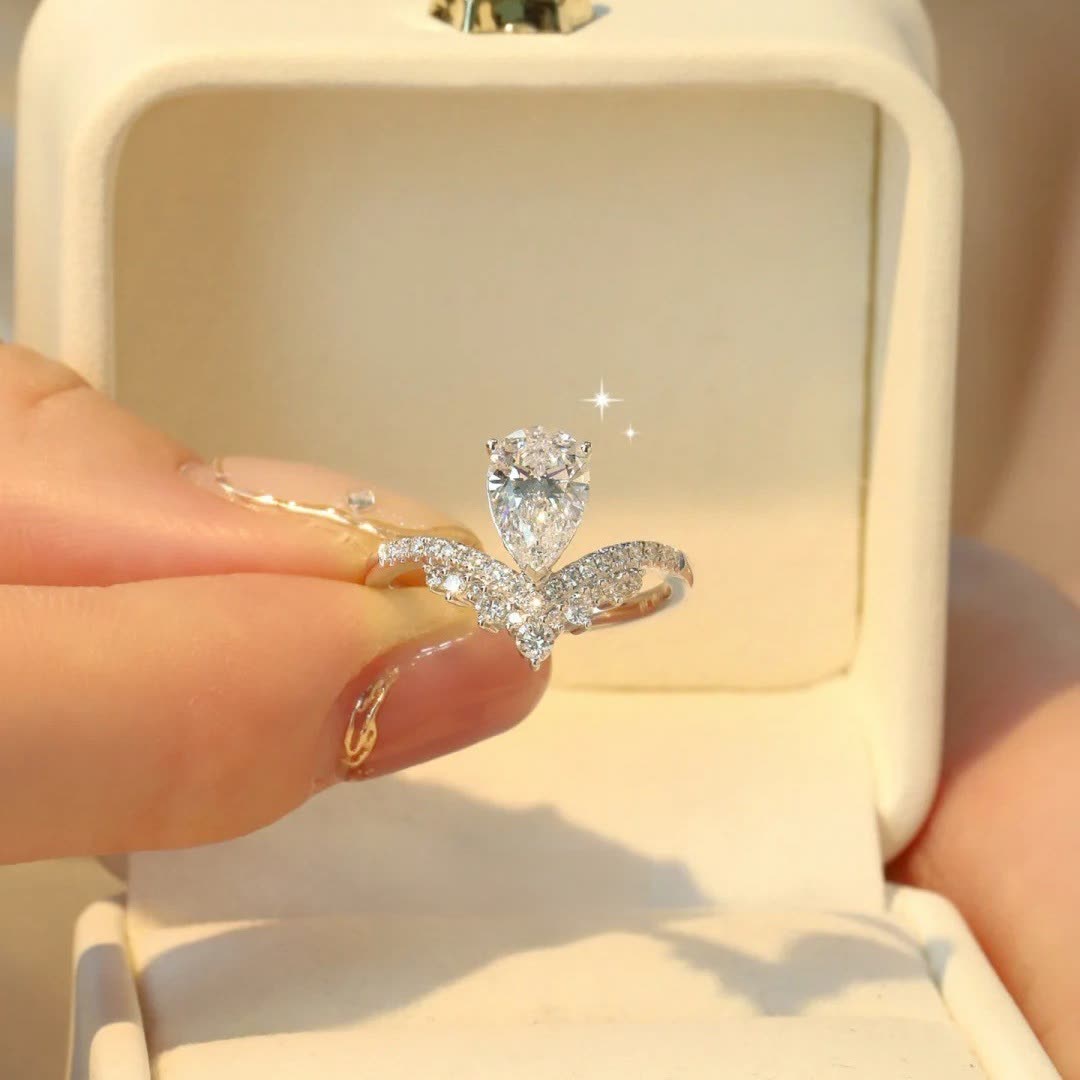
Stone size, stone count and hand work set the price across these shapes, and the arithmetic is in the ring, earring size, pendant and Cuban chain guides. For the material itself, see what moissanite is and how it compares with lab-grown diamond.
Frequently asked questions
Why does a diamond tester read moissanite as diamond?
Because the probe measures heat conduction, and silicon carbide conducts heat in the same league as diamond. The instrument compares what it senses against a threshold, moissanite clears it, and the top lamp lights. The International Gem Society states it plainly: a diamond tester will only test positive for diamond and moissanite. The reading measures one property; it does not identify the stone.
Do diamond testers work on moissanite at all?
Only as a way of ruling things out. A heat pen rejects cubic zirconia, glass and most other simulants, which is useful when screening a parcel. It cannot confirm moissanite, and cannot tell moissanite from diamond, because both clear the same threshold. A multi-tester that adds electrical conductivity separates them more often, though IGI notes that some lab-grown stones with metallic residues, and stones containing boron, can read as moissanite. Searches for 'mossanite tester' turn up the same instruments.
What do the lights on a diamond tester mean?
They name positions on the instrument's own scale, not materials. A basic pen has one row of lamps and a single top mark, often labelled DIA: anything above the threshold lights there, which covers diamond and moissanite alike. Multi-testers add a separate moissanite indication, driven by conductivity, and a CZ zone for poor conductors. REFER is the machine declining to decide, not a verdict.
Why does the same ring give a different reading twice?
Because contact matters as much as the stone. If the tip touches a prong, a basket or a chain, metal draws heat away faster than the stone does and the reading climbs. A small stone surrounded by metal leaves the tip nowhere clean to sit. A film of hand cream or skin oil insulates the surface and pushes the reading down. A low battery, a cold probe or a tilted tip move it too. Clean the stone and hold the tip flat.
Can a tester tell moissanite from a lab-grown diamond?
Not a heat pen. Lab-grown diamond is diamond: same carbon, same structure, same thermal behaviour, so a thermal probe treats the two identically, and cannot separate lab-grown from mined either. An electrical conductivity test separates the materials more often, because silicon carbide conducts and most diamond does not, but IGI notes exceptions. A laboratory settles it with spectrometry. If the question matters, the answer is a report, not a reading.
Reading Confused You?
Send a close-up of the stone and setting, plus the reading you got, and we will tell you which of the five causes fits.
اسأل على واتسابSources: International Gem Society, “How to Spot a Fake Diamond” (tester readings) — gemsociety.org; IGI, “Diamond Detection and Handheld Testers” — igi.org; J. P. Chalain, SSEF, “Update on Moissanite Identification” — PDF.
Shop the Pieces in This Guide
Made to order, hand-set moissanite over 925 sterling silver.
Catalogue prices, 11 November 2026. Gold tones are 18K gold plated.
Where these pieces come from
Everything here is made and set on our own bench in Guangzhou — 925 sterling silver and moissanite, with gold-tone plated alloy watch cases where the listing says so. If you are buying for a store, a brand or a reseller, the wholesale pages carry the minimums, lead times and terms:
- Cuban link chains — wholesale
- Moissanite jewelry — wholesale
- Custom iced out watches — wholesale
- Private label & brand manufacturing
Retail pieces in the same workshop: 16mm Cuban link chain · 18mm iced Cuban chain · RAM iced out pendant · Iced out square-case watch