What Does 925 Mean on a Silver Chain? A Straight Answer
On a silver chain, 925 means 92.5% silver: 925 parts in 1,000, the American sterling standard, with copper making up most of the rest. It does not mean fake, and it does not mean cheap.
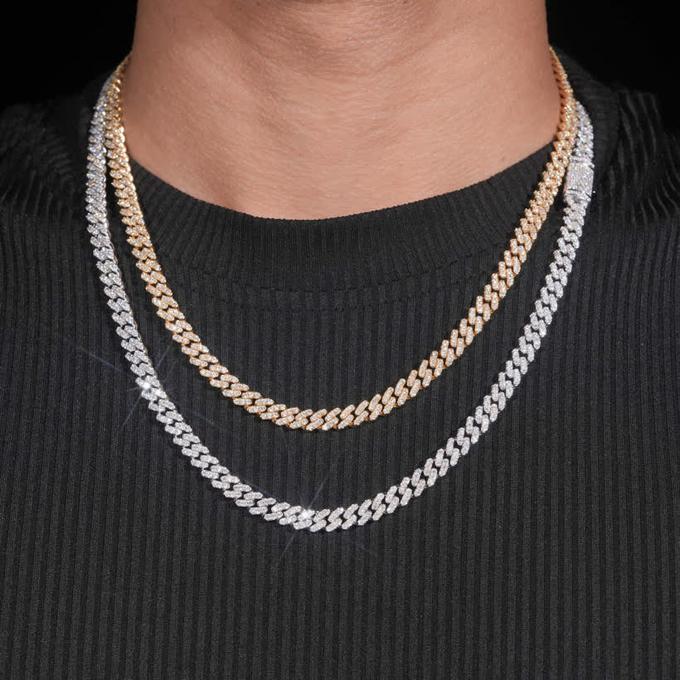
Here is what the number measures, why jewellery uses it, what a stamp cannot tell you, why a chain blackens, and why four chains with the same mark are 5.6 times apart.
What 925 actually means
A stamp is a measurement written small. 925 is parts per thousand of silver by weight: 925 of every 1,000, with the remaining 75 usually copper. Divide it and you have 92.5 per cent; there is no second meaning.
In the United States the figure is the definition of the word, not a convention. 16 CFR 23.5(b)(2) reserves “solid silver”, “Sterling Silver”, “Sterling” and “Ster.” for articles of at least 925/1000 fine silver, and 23.5(b)(1) treats the bare word “silver” as misleading unless an equally conspicuous fineness figure in parts per thousand sits immediately in front of it — the rule’s own example is “750 silver”, a lower fineness that is allowed precisely because it is stated.
The rule carries a tolerance: under the National Stamping Act a silver article may test 4/1000 below its mark without solder and 10/1000 with it, so a soldered chain assaying 916/1000 — 9/1000 low — passes on the 10/1000 allowance for a whole article containing solder, though a solder-free part at 4/1000 would fail.
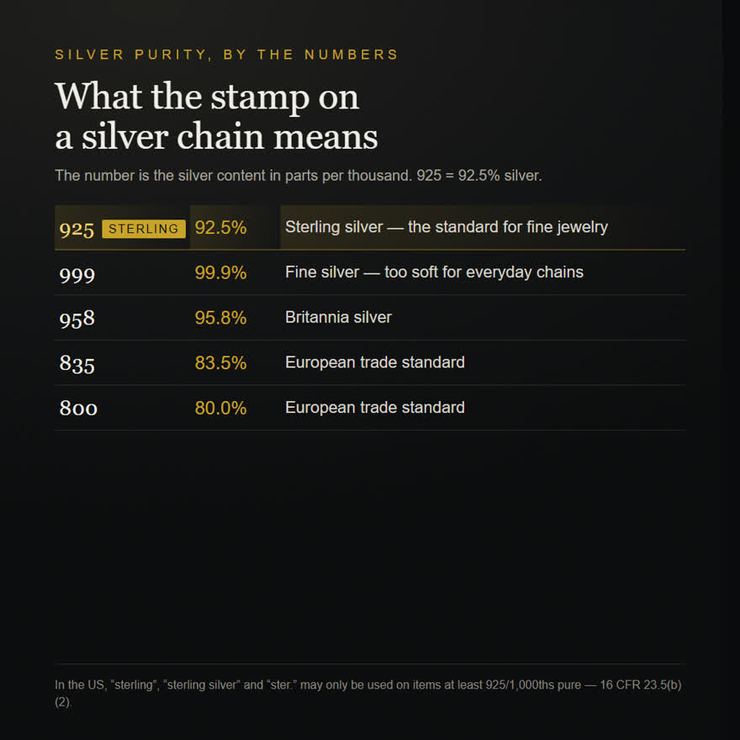
S925 is the same standard in another spelling, the one you most often see on export jewellery; STERLING and Ster. are two more. Spellings, not grades. And the number carries no quality with it: a hollow link and a solid link both read 925.
Why fine jewellery uses 925 instead of 999
So why not the purest silver? 999 is fine silver, 999 parts in 1,000: lovely to look at, hopeless in a chain. A chain is dozens of joints moving every time you turn your head, and in fine silver they wear and deform.
Copper raises hardness and leaves the colour alone, which is how 925 became the standard for anything with a clasp and a moving part. The trade-off runs one way: 999 is purer, 925 is stronger, and a chain needs the second. A 999 chain is not a better chain, it is a different object.
958 is Britannia silver, a British standard still struck today. 835 and 800 are European trade standards, common on older continental pieces; a piece marked 800 is not a fake sterling, it is a piece lawfully made to a lower standard.
| Fineness | Name | Silver per 1,000 | Where you meet it |
|---|---|---|---|
| 925 | Sterling | 925 | The jewellery standard; every chain we sell |
| 999 | Fine silver | 999 | Bullion, coins, pendants; too soft for a chain |
| 958 | Britannia | 958 | British standard, still marked |
| 835 | — | 835 | European trade standard |
| 800 | — | 800 | European trade standard |
Fineness figures are definitions of each standard, not measurements of any piece here.
What the stamp looks like (and what it does not tell you)
The mark is small enough to miss: on a tag folded around the clasp, inside the end cap, or on the flat of a box clasp. A phone macro in daylight reads it; a loupe reads it better.
Look for a crisp 925 or S925 with clean edges. A country name beside it is an origin stamp and a maker mark is a signature; neither raises the fineness.
What the stamp cannot do is describe what is underneath: it says sterling, not whether a plating sits on top, how many grams the chain holds, or whether the links are solid.
And it is a claim, not a result. The mark goes on with a steel punch, and a stamp is cheap to apply — which is why the US rules put the obligation on the seller. Treat it as the start of the check.
Sterling, gold plated, silver plated: three very different things
Three objects get sold near the word silver, and only two are silver through the link.
| Build | What the metal is | Usual marking |
|---|---|---|
| Solid sterling | S925 through the whole link | 925 / S925 / STERLING |
| Sterling, plated finish | S925 core, gold colour or white rhodium on top | 925 plus the finish named |
| Silver plated | A base metal core, one silver layer on top | Silver plated / silver tone |
The third row is the one the rules are explicit about: 16 CFR 23.5(b)(4) requires a piece whose silver is only a surface layer to be called plated or coated, not simply silver. A listing that says silver and nothing else, at a fraction of the metal's worth, is the one to question.
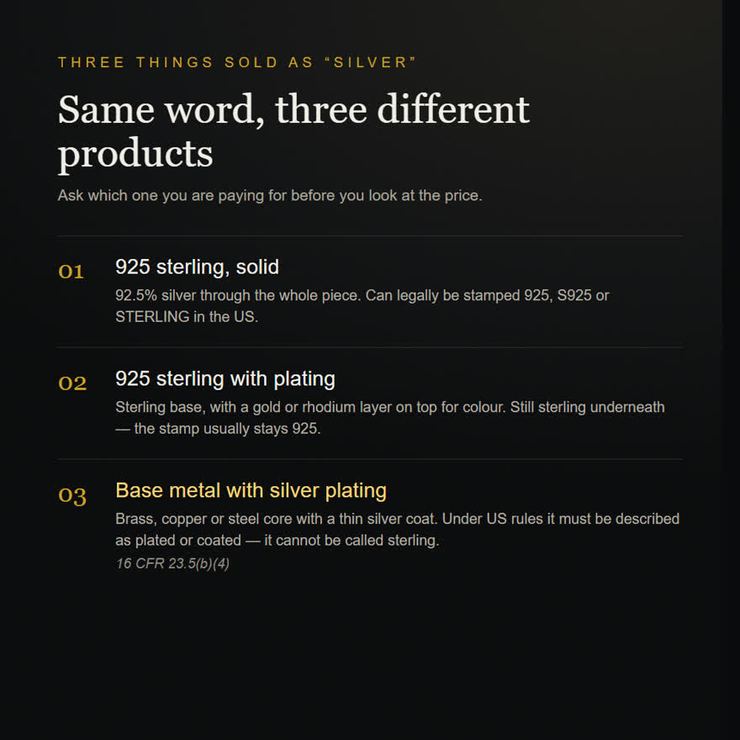
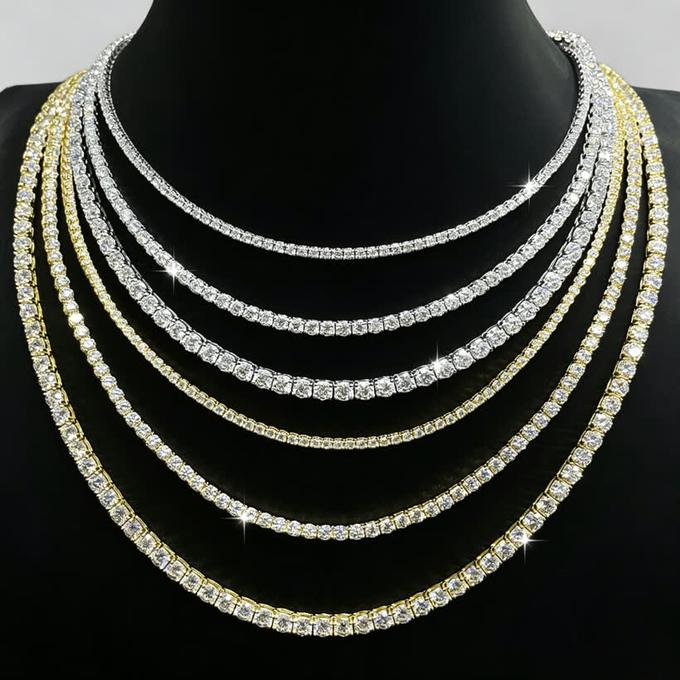
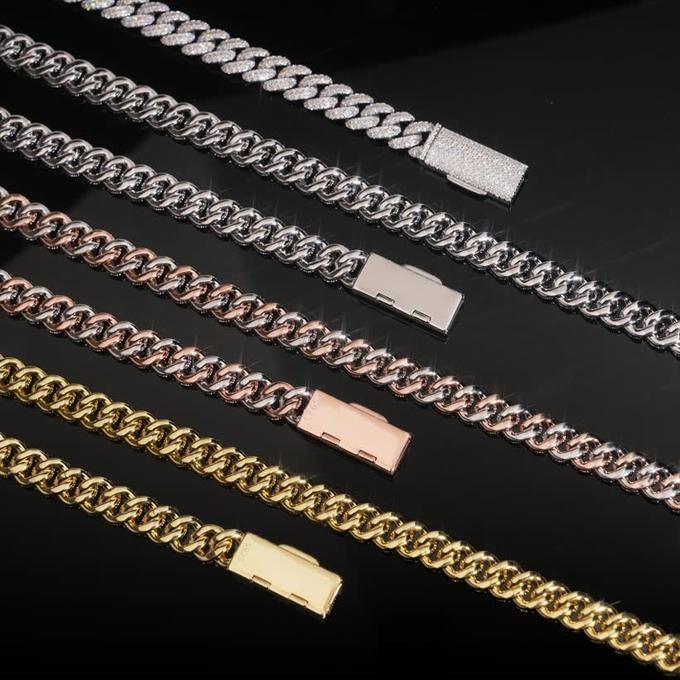
Ours is the second row. Every chain in this guide is an S925 base, and the gold colour is an electroplated finish over it, in the words on our 16 mm triple-row Cuban page: the S925 silver base carries an electroplated finish. White pieces are rhodium plated or bare silver — the tennis chain is silver colour with a rhodium finish.
That has a wear consequence. A plating is a surface, so the points that rub lose it first, and what shows through is silver rather than a different metal. Bare silver has no layer to lose; it darkens evenly instead.
Why a 925 chain turns black
The black film is silver sulfide. Silver reacts with sulfur compounds in the air, and in rubber, and the product is dark. It sits on the surface first, thin as a shadow.
It is not silver coming off, and not a symptom of a low grade — fine silver does the same. What changes is the rate: plating puts a barrier between the metal and the air.
Which is why the first dark spots sit where the plating is thinnest, under the clasp and on link edges. The routine is in how to clean a 925 silver necklace: warm water, a soft brush, dry it fully, no abrasive polish. How silver and plating age is in why silver darkens.

Same 925 silver, four prices
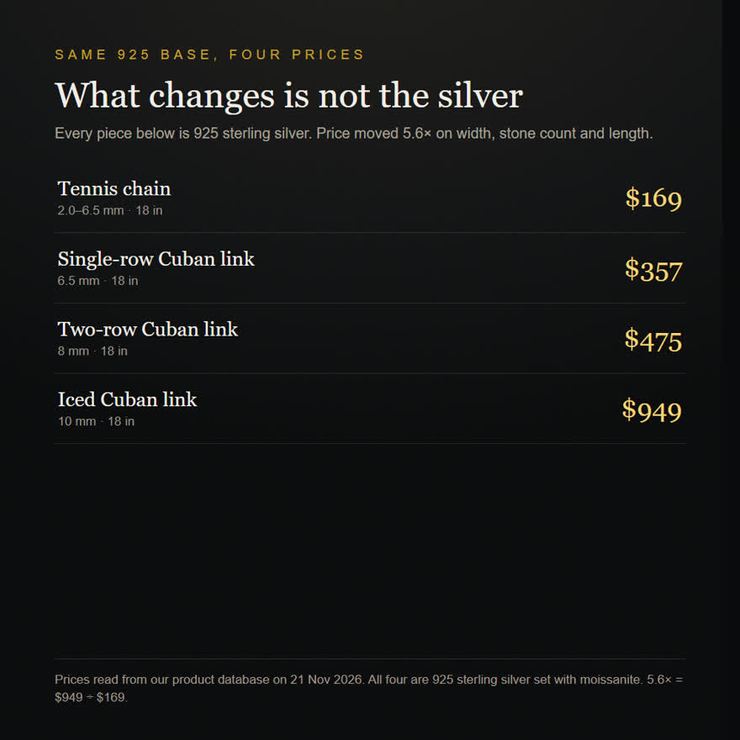
Four chains, all 18 inches, all silver colour, all set with moissanite, all on an S925 base:
| Chain | Width | 18 in price |
|---|---|---|
| Tennis chain, NOV-TN-001 | 2.0–6.5 mm | $169 |
| Single-row Cuban, NOV-CH-9830 | 6.5 mm | $357 |
| Two-row Cuban, NOV-CH-9715 | 8 mm | $475 |
| Iced Cuban, NOV-CH-9836 | 10 mm | $949 |
Variant prices from our own catalogue, read 21 November 2026, in USD.
$949 divided by $169 is 5.6 (5.62 exactly), and the mark on all four is identical. What separates them is not the silver.
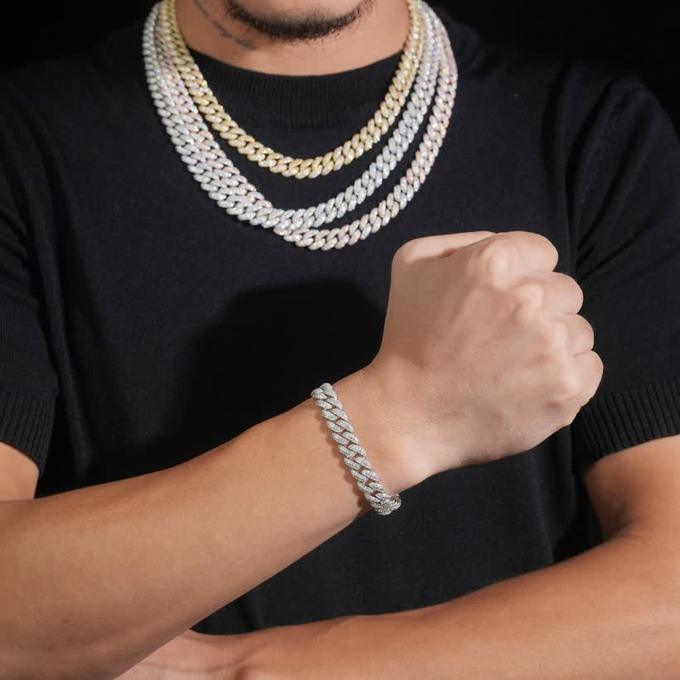
Three things move the number. Width: a 10 mm link carries more metal per inch than a 2 mm one, and more bench time. Stones: the tennis chain sets a continuous row, the two-row Cuban doubles it, the iced Cuban covers the face. Setting hours: every stone is placed by hand, and an iced 10 mm chain carries far more of them than a plain link.
The tennis chain is also the exception worth naming: its price follows length, not width, so at 18 inches a 2.0 mm and a 6.5 mm are both $169.
The arithmetic for wide links is in the Cuban chain cost guide, the same logic for one row of stones in the tennis bracelet cost guide, and the stone itself in what is moissanite.
How to check a 925 stamp at home (and when it fails)
Start with the tag by the clasp, in daylight, on a phone macro. A struck mark has edges and a little depth; one printed flat is not the same thing.
Four checks earn their effort. Read the metal line before the photographs: a page that names its base metal and its finish knows what it is selling. Ask for the fineness in writing, 925/1000 stated rather than implied. Judge weight against size, because a solid link has a heft a hollow one does not. And compare the price with the rest of the page: a 10 mm iced chain well below what the metal and stones can cost is a plating conversation, not a bargain.
Three checks prove nothing. A magnet: silver is not magnetic, but neither is brass or copper, so it separates almost nothing. Ice: how fast a piece melts it depends on the ice and the room. The sound of a dropped chain: not a measurement.
One check works and is not yours to run. Acid testing leaves a mark, and a jeweller should be the one leaving it.
When a check fails, be careful what the failure proves. A very small piece may carry no stamp because there is no flat surface to strike; an absence is not evidence of plating. A listing that names a plating and calls the piece silver plated is legal, honest, and a different product from a sterling chain.
Length is the other thing a stamp never covers, and it changes how a chain sits more than a millimetre of width does: the chain length guide has the measurements. The full range is on all chains.
Frequently asked questions
What does 925 mean on a silver chain?
It means the metal is 92.5 per cent silver: 925 parts of every 1,000, the rest a hardening alloy, usually copper. That fineness is the American definition of sterling; 16 CFR 23.5(b)(2) allows the words sterling silver only at 925/1000 or above.
Is 925 silver real silver?
Yes. 925 is sterling, the standard alloy for jewellery. Fine silver is 999/1000 and purer, but too soft for a chain with dozens of moving joints, so copper buys hardness at the cost of 7.5 per cent of the silver — the 75 parts in 1,000 that are no longer silver. Neither mark is a fake.
Is S925 the same as 925?
Identical. S925 is the same standard with an S in front, the form you most often see on export jewellery. STERLING and Ster. are two more spellings. None of the four says anything the plain number does not.
Why did my 925 chain turn black?
Silver reacts with sulfur compounds in the air and forms silver sulfide, which is dark. The film sits on the surface: it is not silver wearing away, and fine silver does the same. Plating slows it and wears through first at the clasp and the link edges.
Is 925 silver safe for sensitive skin?
The silver is rarely the problem. Irritation from inexpensive jewellery usually comes from the alloy or the plating, and nickel is the usual suspect. Ask which metals are in the alloy and which finish is on the surface, and consider a piece with no plating, where the metal you touch is the metal the stamp names.
Ask us what is under the stamp
Every chain in this guide is an S925 silver base, and we will say in writing which finish sits on top — gold colour plating, rhodium, or bare silver.
Ask on WhatsAppNotes on this page
Prices are variant prices read from our own catalogue on 21 November 2026, in USD, for 18-inch chains in silver colour. Every chain named here is an S925 silver base set with moissanite, which is silicon carbide and carries no gem-lab clarity grade. Gold colour and rose colour mean an electroplated finish over that silver base, not a solid gold alloy, and not every style is offered in every colour. Fineness definitions follow 16 CFR Part 23 and the National Stamping Act tolerances; they describe the standards, not a laboratory assay of any individual piece. Nothing here is a statement about silver prices or about the market as a whole.
Shop the Chains in This Guide
Made to our spec in Guangzhou — S925 silver base, moissanite set in our workshop, finish named per style.
Where these pieces come from
Everything here is made and set on our own bench in Guangzhou — 925 sterling silver and moissanite, with gold-tone plated alloy watch cases where the listing says so. If you are buying for a store, a brand or a reseller, the wholesale pages carry the minimums, lead times and terms:
- Cuban link chains — wholesale
- Moissanite jewelry — wholesale
- Custom iced out watches — wholesale
- Private label & brand manufacturing
Retail pieces in the same workshop: 16mm Cuban link chain · 18mm iced Cuban chain · RAM iced out pendant · Iced out square-case watch