Does Moissanite Pass a Diamond Tester? The 2026 Guide
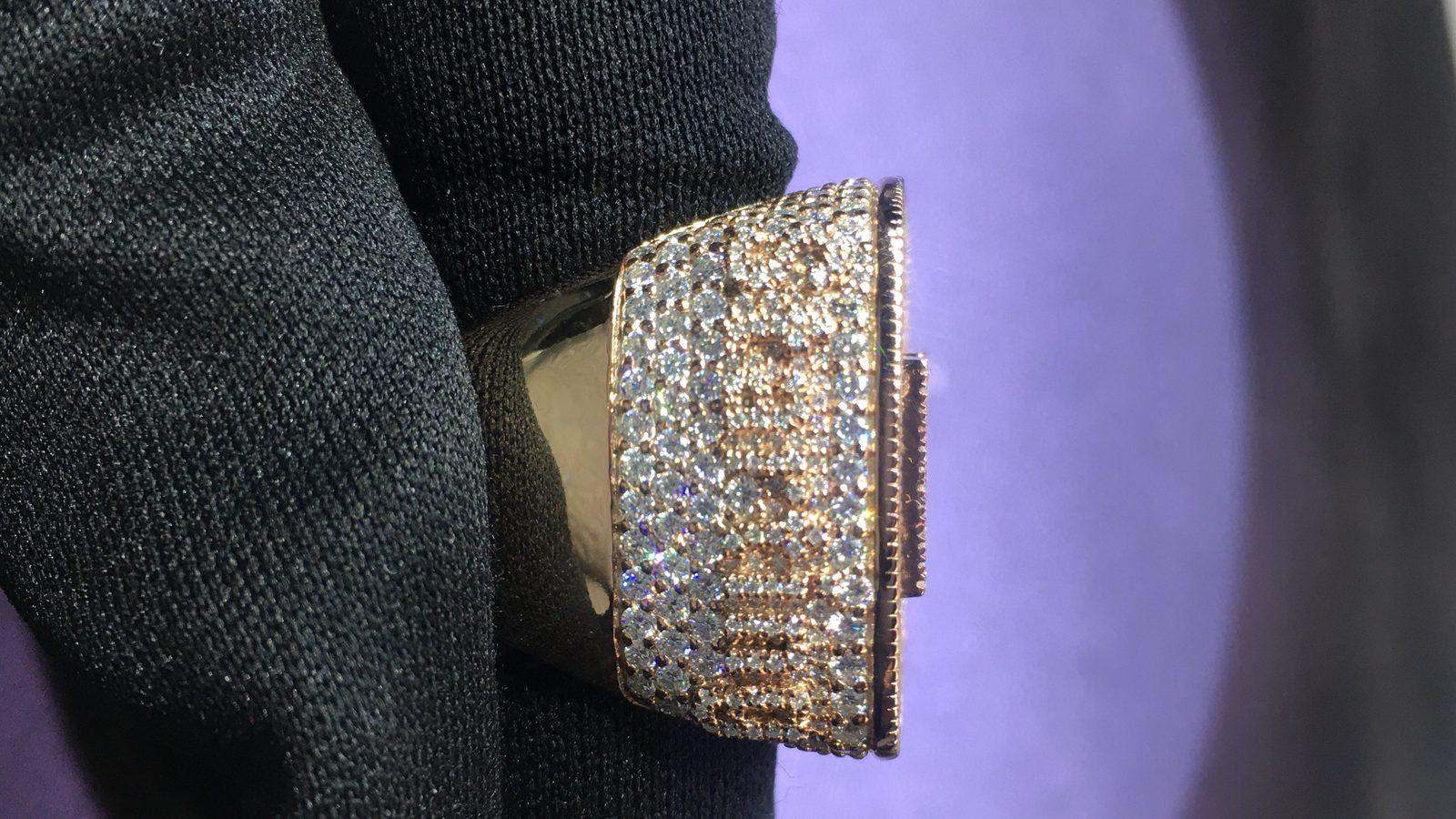
Every week someone writes to us with the same story: they took their new iced-out piece to a jeweler, the jeweler touched a pen to the stones, and the pen said “diamond.” Great news — except the piece is moissanite, and now the buyer doesn't know what they own. So let's settle it properly, with the sources in the open.
Short answer: yes — on almost every pocket thermal tester, a moissanite lights up the same way a diamond does. That is a known, documented limitation of the instrument, not proof that the stone is a diamond. The U.S. Federal Trade Commission's own guide for the jewelry trade has a section on it. To tell the two apart you need a second reading (electrical conductivity), a jeweler's loupe, or a lab.
What a diamond tester actually measures (it is not “brightness”)
There are two families of handheld testers, and the difference matters:
- Thermal testers (the classic pen). They measure how fast heat moves through the stone. Diamond is one of the best heat conductors found in jewelry, and cubic zirconia is one of the worst, so a heat reading separates those two very cleanly. This is the tester most people mean, and it is the tester in the photos.
- Multi-testers (two steps). These read thermal and electrical conductivity. Presidium Instruments, which makes the pocket Multi Tester III, describes it as an instrument that “instantly identifies colorless diamonds and moissanites based on their thermal and electrical properties” — two physical properties, two steps.
Neither reading tells you anything about how a stone looks. Testers measure physics, not beauty.
Why moissanite reads as “diamond” on a heat tester
Moissanite is silicon carbide (SiC) — a crystal with its own chemistry, hardness and optics, not a copy of diamond and not a variety of it. One of its properties happens to be very high heat conductivity, close enough to diamond's that a pen built to catch cubic zirconia cannot tell them apart.
The FTC says this in plain language in In the Loupe: Advertising Diamond, Gemstones and Pearls: “Thermal testers used to distinguish diamonds from cubic zirconia may not accurately identify moissanite — a laboratory-created gemstone that resembles a diamond. As a result, this stone may falsely register as a diamond on your thermal detector.” The same page then tells the trade to find “a newer tester” or other ways to distinguish the two.
Read that carefully, because it is also the honest version of a claim you will see all over iced-out jewelry: passes a diamond tester is a meaningful quality signal — it means the stones are not cheap CZ — but it is not a claim that the stone is a diamond. If a seller tells you a passing tester makes the piece “diamond,” that is a different, and much larger, statement. (We explain the material itself in What Is Moissanite? The Complete 2026 Guide.)
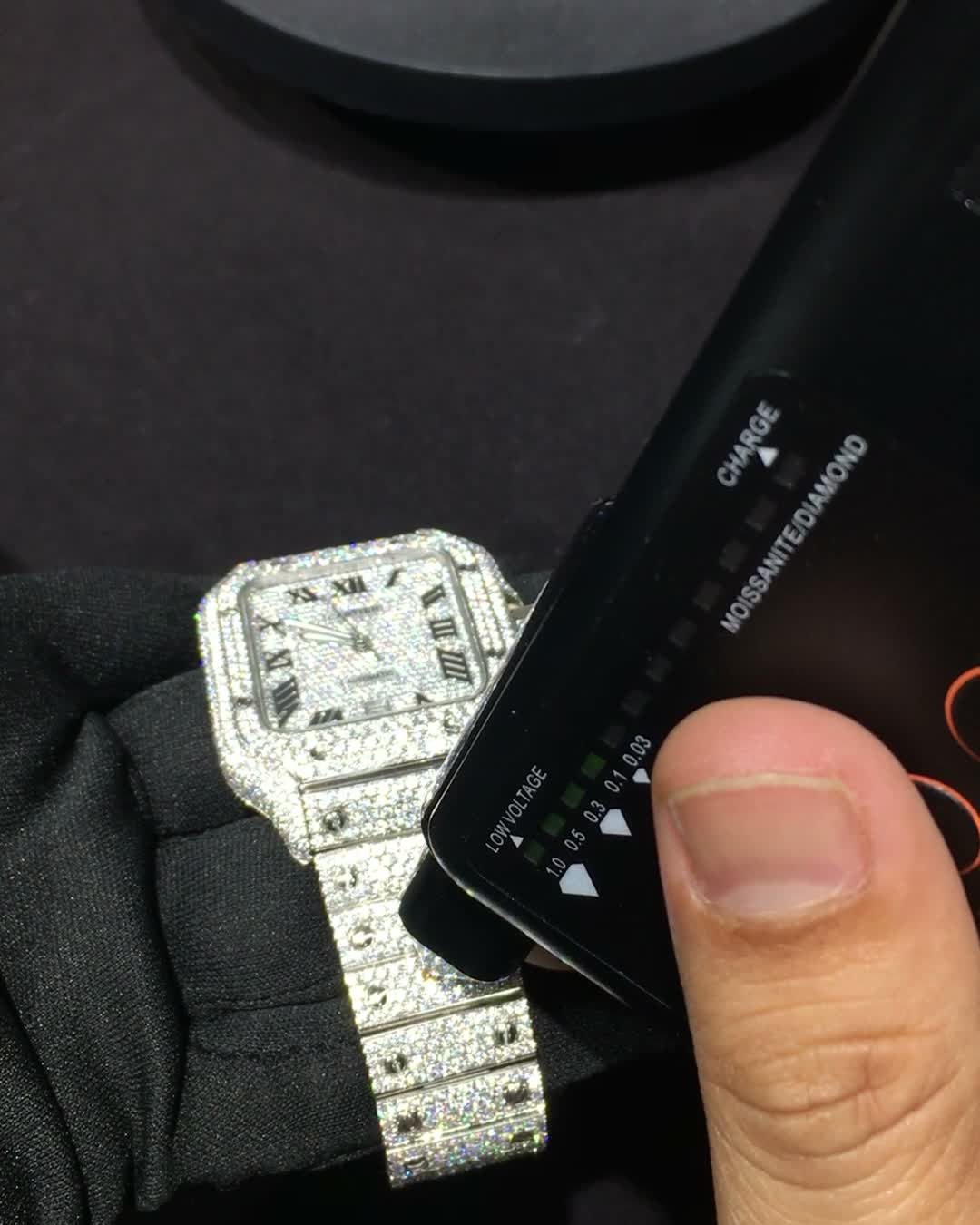
The read-out cheat sheet
| What the tester shows | What it usually means | What it does not tell you |
|---|---|---|
| “Diamond” / high reading on a heat tester | The stone moves heat quickly — a diamond or a moissanite. Nothing else in iced-out jewelry is built to do this. A cheap CZ or glass will not read this way. | Which of the two it is. The instrument cannot separate them. |
| Low or no reading | The stone is a poor heat conductor — typical of cubic zirconia or glass. Moissanite almost never fails a functioning heat tester. | Whether the stone has a surface coating that is masking its actual behaviour. Filmed or coated stones can read oddly, so a low reading should be re-checked under magnification. |
| “Moissanite” on the second step of a multi-tester | The electrical step: silicon carbide conducts electricity, while most diamonds do not, so the second reading separates the pair. | Nothing about colour, clarity, cut quality or the metal underneath. It identifies a material, not a quality. |
Sources: FTC, In the Loupe (Jewelry Guides guidance for the trade); Presidium Instruments product documentation for its multi tester. The same comparison of materials, side by side, is in Moissanite vs CZ vs Lab Diamond (2026).
Don't over-trust the pen — the trade doesn't
Cheap testers are useful and widely misused. In a National Jeweler feature sponsored by the International Gemological Institute (IGI), the lab warned that “an alarming number of pros continue to mistakenly believe that inexpensive diamond testers will distinguish” one stone type from another — the reason labs still screen goods with spectrometric analysis rather than a $20 pen. A single reading from a single pen is a screening result. It is not an identification.
How a jeweler actually tells moissanite from diamond
Three checks do the work:
- Doubling under a loupe. Moissanite is doubly refractive — if you look through the table with a 10× loupe and focus on the facet edges below, they appear doubled. Diamond is singly refractive and shows clean, single edges. This is the check that a trained bench jeweler reaches for first, and it works on mounted stones.
- The electrical step. On a multi-tester, the second reading separates silicon carbide from diamond (see the cheat sheet above).
- Paperwork and a lab. Labs do issue third-party reports for moissanite: IGI began issuing Certificates of Authenticity for moissanite from one U.S. distributor on 16 December 2022, verifying the material and giving the stone's shape, weight and colourless characteristics. That phrasing is deliberate — it is a Certificate of Authenticity, not a diamond-style grading report, because moissanite is not graded on the diamond clarity scale. GIA has put the point precisely in a Gems & Gemology lab note: a moissanite's clarity “would have been equivalent to VVS 2 (if such clarity grades were assigned to synthetic moissanite).” They aren't.
This is why, when we describe a stone's colour or clarity, we attribute it to our supply standard (D–F colour, VVS clarity, excellent cut) rather than to a grade — and why the paperwork we ship for a piece with a centre stone is a certificate confirming the stone is moissanite, not a grading certificate.
Two things a tester can be fooled by
- Coated stones. A thin diamond-like coating on a cheap stone can make a heat tester flash a high reading temporarily — one reason fakes keep appearing in this category. GIA has documented fraudulent stones entering the market with forged inscriptions (lab note, Gems & Gemology, Fall 2020). At the bench the tell is physical: a film or edge wear at the girdle and pavilion, and a second reading that does not hold. That is what we look for on pieces coming through the workshop.
- Small stones. A tester probe has to sit on the stone being measured. On a fully iced chain, watch or ring, most stones are small and set, so testing is done on the largest stones that the probe can reach. A high reading from a few stones is good news about the material used — it is not a per-stone audit of a 300-stone piece. Anyone who tells you otherwise is selling, not testing.
What iced-out moissanite actually costs in 2026
Since the stone is what you are paying for, here is where our own catalogue sits as of September 2026 — our selling prices, what you actually pay, no membership games. The mass-market versions of the same look, built on cubic zirconia, sell for something like $30–$200; the gap between that and the numbers below is the stone, the metal and the setting.
| Category | NOVAE ATELIER selling price range (2026) | What moves the price |
|---|---|---|
| Stud earrings | $29 – $159 | Stone size and count; 925 sterling silver base |
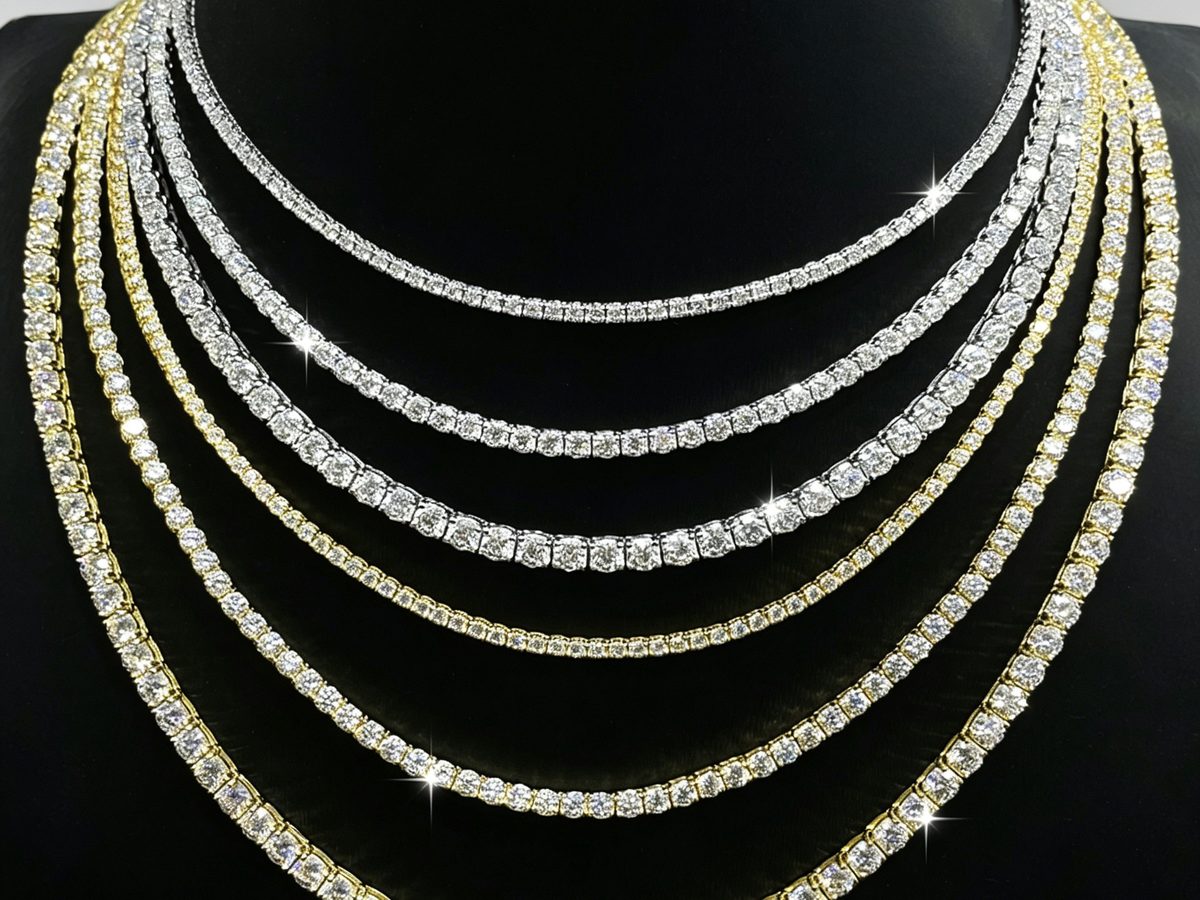
| Tennis chains | $119 – $169 | Width and stone size (2mm up to 6.5mm); stone count along the length |
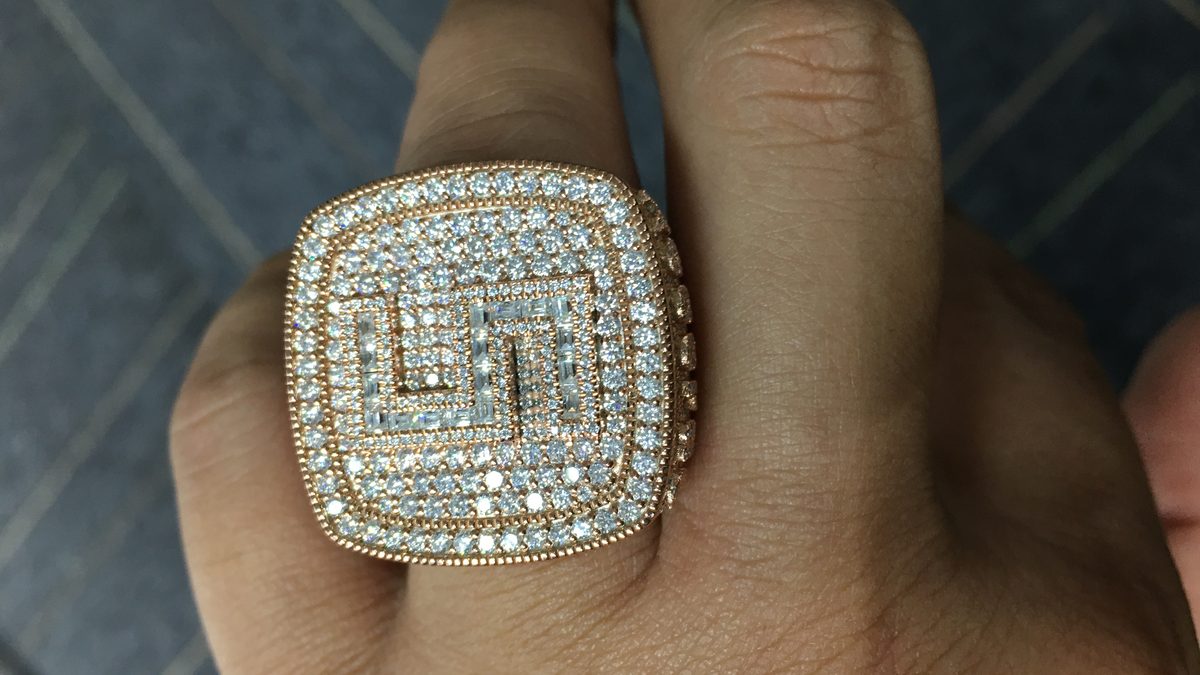
| Rings | $49 – $585 | Centre stone size, how many rows of stones, total coverage |
| Bracelets | $79 – $539 | Tennis or Cuban styling, stone size, length |
| Cuban link chains | $189 – $3,589 | Link width (6.5mm to 18mm), stone cut, rows per link, weight |
| Pendants | $29 – $1,749 | Size, stone count, custom lettering or a one-off design |
| Iced-out watches | $321 – $1,599 | Full case and bracelet coverage plus the watch itself |
| Grillz | $411 – $1,096 | Made to your tooth mould; teeth covered (8 on 8, 10 on 10) |
Prices in this table are our own selling prices — what you pay — read from the NOVAE ATELIER catalogue as of 12 September 2026 and quoted in USD. Chain pricing by width and stone grade is broken out in How Much Does a Custom Moissanite Cuban Chain Cost?
Five questions to ask before you buy iced-out moissanite
- What stone is it — in writing? The seller should say “moissanite.” If the word used is “diamond” without a qualifier, that is the exact problem the FTC's rules exist for, and it says more about the seller than the stone.
- What paperwork ships with it? A certificate naming the material is the honest document. A document that looks like a diamond grading report is a marketing prop.
- What kind of tester did you use? A single heat pen is a screening tool. A two-step multi-tester plus a loupe check is a proper answer.
- Can I see the profile of a stone? Looking at the girdle and edges under magnification is how a coating gets caught.
- What is the metal, exactly? “925 sterling silver,” “18K gold plated,” “rhodium plated” are all fine answers. Vagueness is not. Plated jewellery is honest jewellery when it is described as plated.
Frequently asked questions
Does moissanite pass a diamond tester?
On most pocket thermal testers, yes — the FTC says thermal testers may “not accurately identify moissanite” and that it “may falsely register as a diamond.” A two-step multi-tester (heat, then electrical conductivity) can separate them.
Will a jeweler know my moissanite is not a diamond?
A trained bench jeweler usually can, with a loupe (doubling) or a multi-tester. A shop working only from a cheap thermal pen cannot be sure either way — the same pen that says “diamond” to your face would have said the same about a diamond.
Is moissanite the same material as a diamond?
No. Moissanite is silicon carbide; a diamond is carbon. Different chemistry, different hardness (9.25 vs 10 on the Mohs scale), different optics. On this page and on every NOVAE product listing we name the stone as moissanite.
If a stone fails a diamond tester, is it cubic zirconia?
Usually. CZ is a poor heat conductor and reads low. Moissanite almost never fails a working heat tester, so a failure points away from moissanite.
Does testing damage the stone or the setting?
No. Testers work by contact probe, reading heat or conductivity; there is no radiation, no scratching and nothing left behind on the piece.
Is moissanite graded like a diamond?
No. There is no official clarity grading system for moissanite. When we publish “D–F colour, VVS clarity,” that is our supply standard for the stones we buy — not a grade issued by a lab.
How much does iced-out moissanite jewelry cost in 2026?
From the NOVAE workshop in September 2026: stud earrings $29–$159, tennis chains $119–$169, rings $49–$585, bracelets $79–$539, Cuban link chains $189–$3,589, pendants $29–$1,749, watches $321–$1,599 and grillz $411–$1,096. These are our selling prices as of 12 September 2026.
Want us to test a piece for you, or build one?
Send us a photo of what you have in mind — a chain, a tennis bracelet, an iced watch — and we'll tell you the stone option, the metal and the actual price before you commit. If you already own a piece from us and want to know exactly what is in it, ask and we'll confirm the material on the order.
Ask on WhatsAppSources: U.S. Federal Trade Commission, In the Loupe: Advertising Diamond, Gemstones and Pearls (section “Diamond Testers and Moissanite”); Presidium Instruments, product documentation for its diamond/moissanite multi tester (thermal and electrical readings); International Gemological Institute, announcement of Certificates of Authenticity for moissanite, 16 December 2022; National Jeweler, feature on gem screening sponsored by IGI; GIA, Gems & Gemology lab note on synthetic moissanite with a fraudulent GIA inscription (Fall 2020) and lab note on clarity grades for synthetic moissanite; published gemological reference data for silicon carbide (refractive index 2.65–2.69, dispersion 0.104, Mohs hardness 9.25, birefringence 0.043). Prices are our own catalogue figures as of 12 September 2026 in USD. Stone testers are screening instruments; for a legal or insurance-grade identification, use a gemological laboratory.


