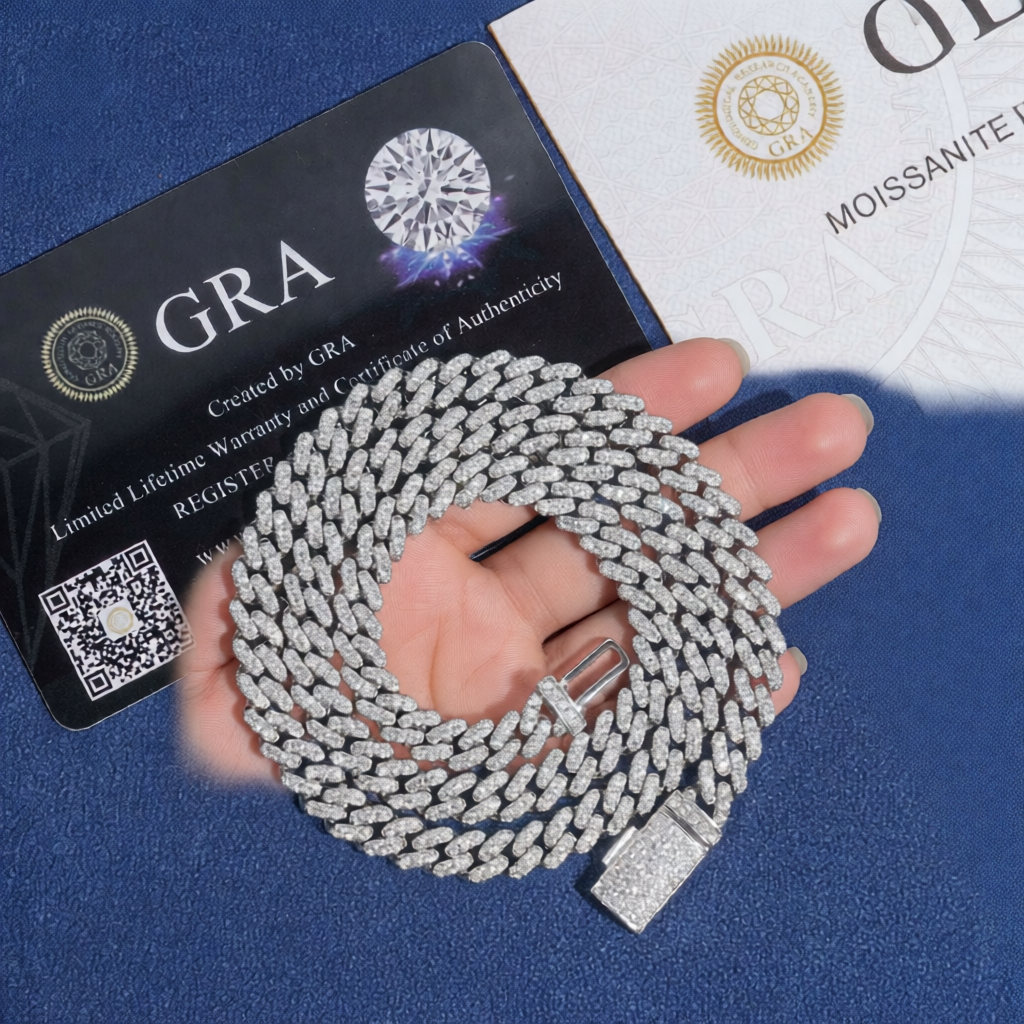
Does Moissanite Tarnish? 925 Silver & Gold Plating (2026 Guide)
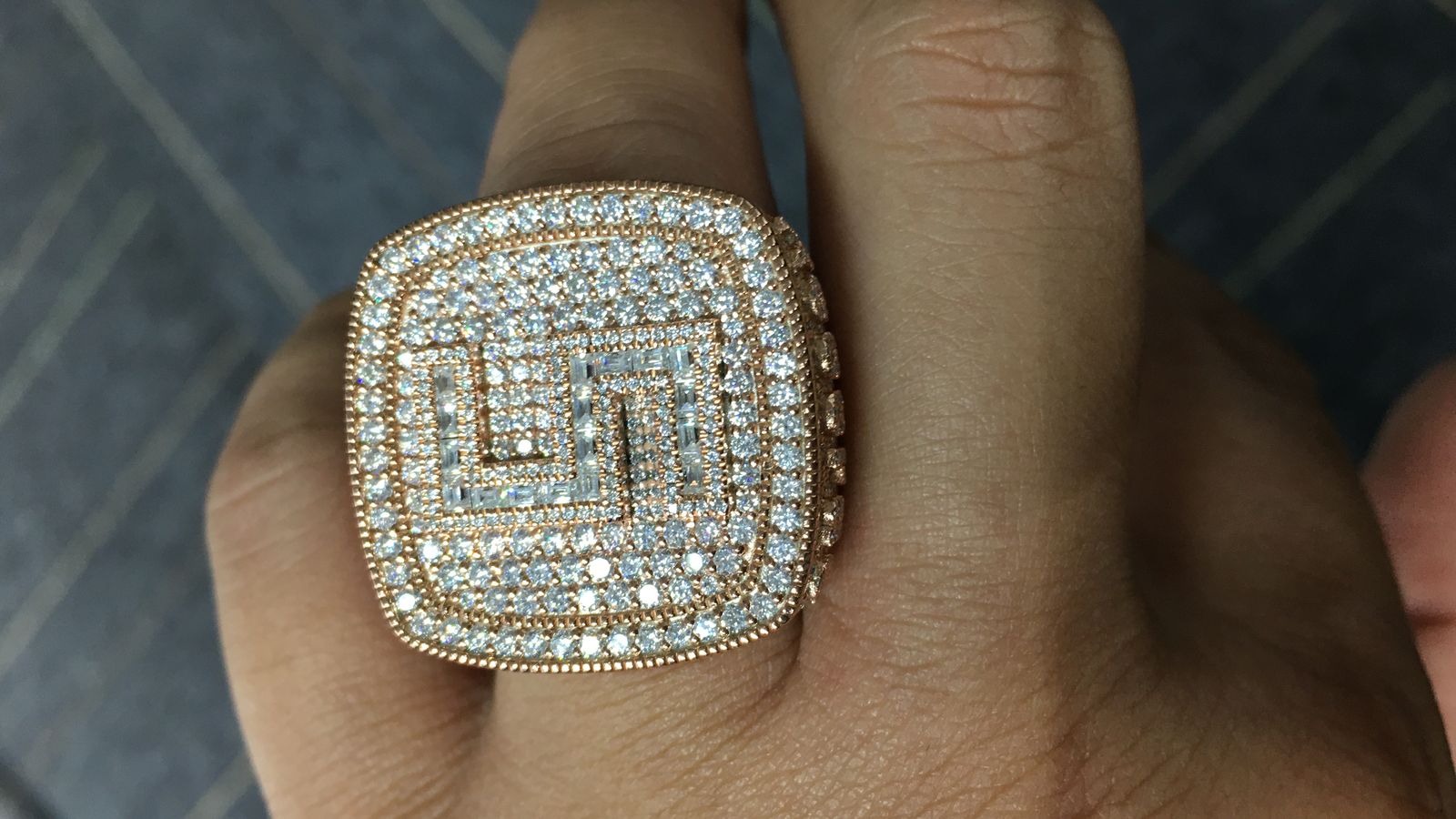
The tarnish question arrives in two versions, and the two usually get mixed up. One is about a silver chain that has gone dark at the back of the neck, near the clasp, while the front still looks fine. The other comes from someone who read that moissanite “goes cloudy after a couple of years” and wants to know whether they bought the wrong stone. The two questions sound identical. They are not, because they are about two different materials that live in the same piece of jewelry — and the honest answer is different for each.
Short answer: moissanite does not tarnish. It is silicon carbide, a crystal rather than a metal, and tarnish is a reaction that happens on metal surfaces. The part that changes over time is everything around the stone: 925 sterling silver dulls and darkens eventually, and the rhodium or gold finish sitting on top of it is a barrier that slows that down and then wears. Nothing here is broken, and nothing here is permanent — how fast it happens comes down to how often you wear the piece, what touches it, and how you store it.
Tarnish is a metal problem, not a stone problem
Tarnish gets described as a stain, which makes it sound like dirt. It is a chemical reaction. Jewelers Mutual, the jewelry trade's specialist insurer, puts it plainly: silver tarnish “is a chemical reaction between silver and sulfur,” and it “is a dark, often black, discoloration that forms on the surface of silver jewelry over time” — adding that while most people picture a dark patina, it “can also appear green.” Their list of what drives the reaction is worth reading, because it is almost entirely made of normal life: hydrogen sulfide in the air (concentrated in polluted cities), sweat and body oils, cleaning agents, hairspray and perfume, and the way the piece is stored.
The Gemological Institute of America makes the same point from the materials side in its care guidance: “Exposure to chemicals can damage or discolor precious metals – gold, silver and platinum.” (GIA, “Tips on Caring for Jewelry,” 10 December 2015.)
Now the stone. Moissanite is silicon carbide (SiC). In a peer-reviewed study in the journal Current Science, gemologist Kurt Nassau describes synthetic moissanite as “second in hardness to diamond but not having diamond's pronounced cleavage,” and gives its stability directly: “The stability of moissanite to heat is better than that of diamond: in air to 1700°C (3092°F), in vaccum to 2000°C, to most chemicals to well over 1000°C, except to fluorine, chlorine, molten alkalis and some molten metals.” (Kurt Nassau, “Synthetic moissanite: A new man-made jewel,” Current Science, Vol. 79 No. 11, 10 December 2000.)
One honest note on that sentence, because it contains the word “chlorine.” That list comes from a paper about industrial and high-temperature behavior, and it describes conditions an industrial furnace reaches, not conditions a swimming pool reaches. My reading — mine, not the paper's — is that a pool is not in that class. What a pool does threaten is the metal, which is a separate and much more ordinary problem: GIA notes that chlorine bleach “can pit or damage gold alloys.” We come back to that below.
Does moissanite itself fade, cloud over, or lose its fire?
No — not from tarnish, and not from age. The “cloudy moissanite” claim is one of the more persistent pieces of folklore in this category, and the trade's own explanations of it agree on what is happening. Cullen Jewellery, whose bench services moissanite daily, writes that “moissanite does not naturally become cloudy or lose sparkle over time” and that “what is often perceived as cloudiness is usually surface build-up from everyday wear, such as hand cream, soap, oils, or dust” (Cullen Jewellery, moissanite care guidance, 17 December 2025). Keyzar reached the same conclusion and lists the culprits as oils, cosmetics and chemicals rather than the stone (Keyzar, “Does Moissanite Get Cloudy Over Time?”, 24 April 2022).
There is a good reason the crystal holds up. Nassau rates its hardness at 9¼ on the Mohs scale against diamond's 10, and notes that it lacks diamond's pronounced cleavage — which is why it survives “all usual jewellery procedures such as setting, repairing and cleaning.” A material that can sit through a repair at a jeweler's bench without complaint is not going to be undone by your hand cream.
So a dull moissanite is a dirty moissanite, and the fix is the least glamorous advice in this article. GIA's method: “Most colored gems can be cleaned with warm water, mild dish soap (no detergents) and a soft brush.” Rinse it in a glass of water rather than under the tap, for a reason GIA spells out — “you risk losing loose stones – or even an entire piece of jewelry - if you rinse directly in the sink.” Five minutes, no repolishing, no re-cutting. The stone you bought is the stone you still have.
Two different questions tend to travel together here, and they have separate answers. What the stone is made of is covered in What Is Moissanite? The Complete 2026 Guide. How you confirm what you were sent is its own subject — see Does Moissanite Pass a Diamond Tester? — and the short version is that a bench jeweler checks the stone itself, while a pocket heat pen cannot separate moissanite from diamond and was never built to.
The part that actually changes: 925 sterling silver
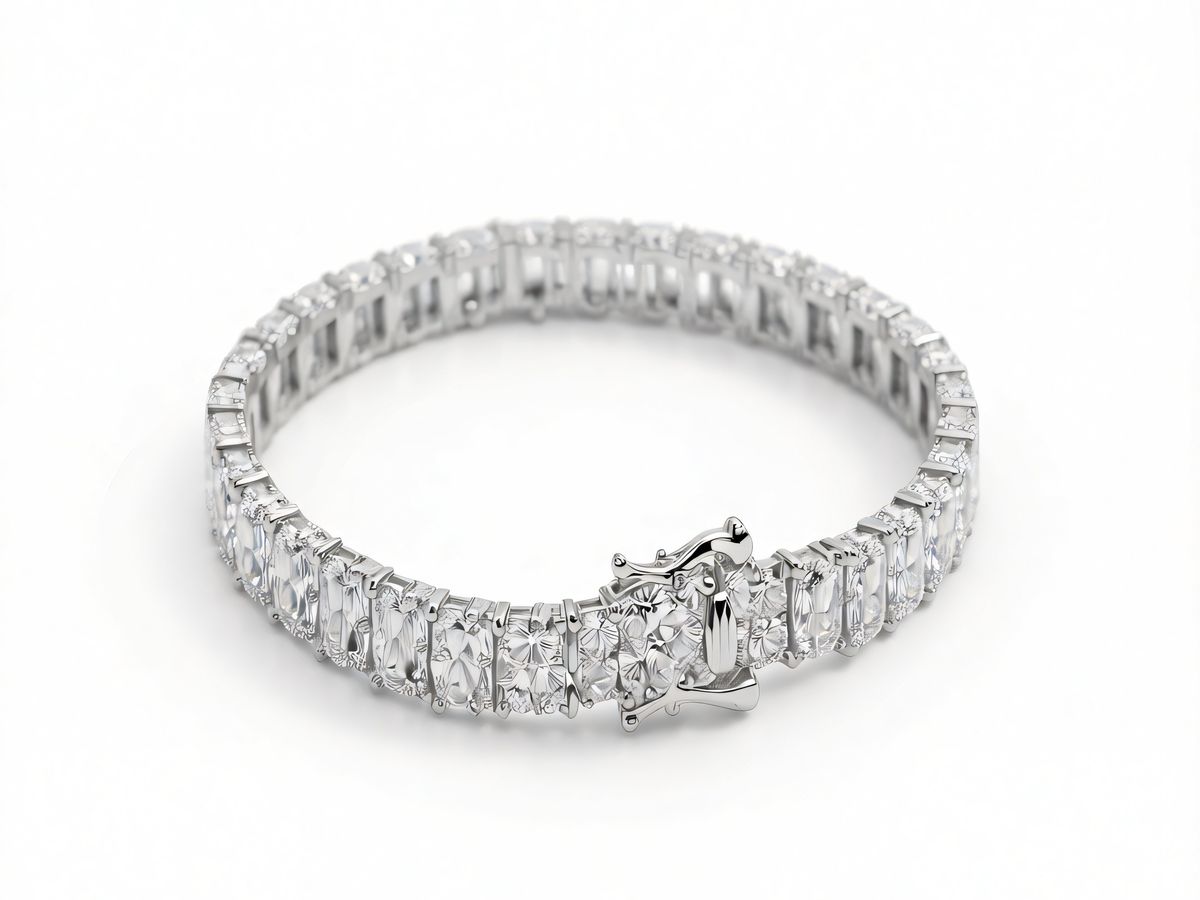
“925” is not marketing language. Under the US Federal Trade Commission's jewelry rules, a piece may only be described as Sterling Silver if it is at least 925/1,000ths pure silver (16 CFR § 23.5(b)(2)). The other 75 parts per thousand are usually copper — and that copper is doing two jobs at once. It is what makes the alloy hard enough to wear every day, and it is the reactive part that sulfur and chlorine attack first. Jewelers Mutual notes the second consequence too: the copper in a sterling alloy can react with chemicals, “causing a green discoloration on the jewelry and your finger if you wear a sterling silver ring.”
That leaves our own catalogue with an uncomfortable but simple statement to make. Our jewelry is built on 925 sterling silver — where a piece carries a lower-cost option in another metal, the listing says so — and the watch line is stainless steel rather than silver. Where a piece carries no plating, it will tarnish if it is left in air, worn through humid summers and put away damp. That is chemistry, not a defect in your order, and it is better said before you buy than discovered after. Where a piece is finished in rhodium, the alloy is covered and stays bright while the finish is intact.
There is a legal reason those two words “rhodium plated” appear in our listings instead of something vaguer. 16 CFR § 23.7 states that it is unfair or deceptive to fail to disclose a rhodium surface layer on a product marked or described as precious metal. So we disclose it. It is also the honest answer to a fair question: if you want to know why a white-toned silver piece at one price stays bright and an unplated one at another price does not, this is the paragraph.
How long does gold plating last on jewelry?
This is where most articles get vague, so here is what actually exists in law and what does not. US law defines exactly one thickness standard for gold over sterling silver: a piece may only be described with the regulated term for thick gold plating if it consists of sterling silver “coated or plated on all significant surfaces with gold, or gold alloy of not less than 10 karat fineness … and a minimum thickness throughout equivalent to two and one half (2 1/2) microns (or approximately 100/1,000,000ths of an inch) of fine gold” (16 CFR § 23.4(b), quoted directly). That is not a quality opinion — it is the line where the regulated word becomes legal, and most decorative plating on the market sits below it.
We do not use that regulated term on our pieces. We have not had our plating measured against the 2.5-micron threshold, and we are not going to borrow a standard we cannot show you. Our listings say what the finish is — “18K gold plated,” “rhodium plated,” over 925 sterling silver — and you can read those two words as meaning exactly what they say: a coating, not a solid gold surface.
On lifespan, the numbers in circulation come from the trade rather than from a laboratory, so treat them as guidance. Jewelers Mutual's rhodium-plating guide (22 May 2024) puts it the sensible way: rhodium plating “depends on how often you plan to wear the piece of jewelry and how well you take care of it,” and you will know it is time for a refresh “when the rhodium will wear away enough so you'll be able to see the base metal.” Where a figure is quoted, retailers generally put plating on frequently worn pieces at roughly six months to a year (Brilliant Earth) and up to around eighteen months on pieces worn less (the range quoted across plating guides such as Finematter and Millianna). Read those as expectations, not warranties: a ring worn through hand-washing and gym sessions will need attention far sooner than an earring worn twice a month.
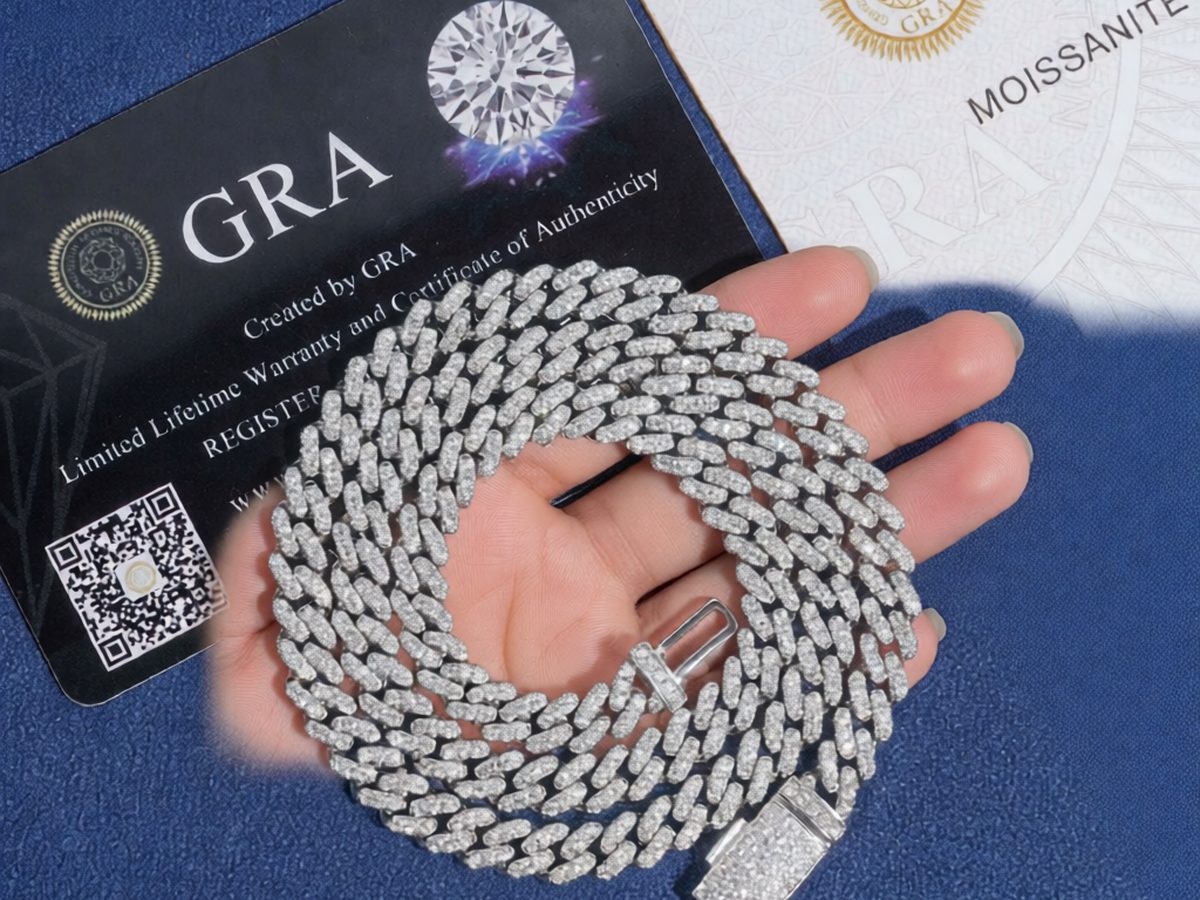
The three finishes, and what happens to each
| Finish | What it is | What happens over time | What slows it down |
|---|---|---|---|
| 925 sterling silver, no plating | At least 92.5% silver, alloyed with a harder metal (usually copper) for strength | Dulls and darkens as silver sulfide forms; faster in humidity, pollution and on the skin-facing side | Anti-tarnish bag or cloth, dry storage, a polish cloth a few times a year |
| Rhodium plated over 925 silver | A platinum-group metal plated on top; the finish that gives a white-toned piece its brightness. Disclosed per 16 CFR § 23.7 | The rhodium itself resists tarnish, but the layer thins with friction and eventually the alloy shows through | Less rubbing on hard surfaces, no polishing compounds, re-plating at a jeweler when it dulls |
| 18K gold plated over 925 silver | An 18-karat gold layer electroplated onto the silver. Listed as plated, never as solid gold | The gold color holds, but the layer wears on high-friction points — clasp, links, the underside of a ring | Remove before sport and cleaning, keep perfume and lotion off the metal, re-plate when it thins |
Finish descriptions follow our own catalogue and the FTC jewelry rules cited above (16 CFR §§ 23.4, 23.5, 23.7). General material behavior follows GIA and Jewelers Mutual care guidance, both linked in the sources at the end of this page.
Shower, pool, gym, sea — the honest water answer
Water does nothing to the stone, so the useful question is what the water is carrying. GIA's advice is direct: “Fine jewelry should be removed before diving into a chlorinated swimming pool or before using household cleaners,” and chlorine bleach specifically “can pit or damage gold alloys.” Jewelers Mutual is equally direct about silver: “Water is a major culprit in tarnishing. Remove your silver jewelry before showering, swimming or doing dishes,” adding that chlorine and ammonia accelerate tarnish.
Put together, that gives a practical ranking rather than a ban:
- Shower. The stone is fine. The soap, shampoo and conditioner leave a film that dulls it, and the clasp area traps residue. If you wear a chain in the shower daily, expect to clean it weekly instead of monthly.
- Pool and hot tub. The one place worth taking the piece off. Chlorine attacks plated layers and gold alloys, and hot water speeds up the chemistry.
- Gym. Sweat is not dangerous to the stone or to a plated finish short-term, but the salt and the friction are. Wipe the piece with a soft dry cloth afterwards rather than leaving it to sit.
- Sea. Fine while you are in it. Rinse in fresh water and dry before storing, because dried salt is abrasive and holds moisture against the metal.
Will it turn your neck or finger green?
This is a metal question with two different mechanisms, and it is worth separating them because only one of them can happen to our pieces.
The first is copper. As Jewelers Mutual describes it, the copper in a sterling alloy reacts with chemicals and produces green discoloration on the jewelry and on the skin. On a bare 925 silver ring, some people — more often in heat, or with hand cream in the picture — will see a faint green mark. It washes off the skin, it does not mark you permanently, and the jewelry itself is unharmed.
The second mechanism is the one behind most “my jewelry turned my neck green” stories, and Jewelers Mutual's rhodium guide names it: if a piece is made from brass and finished to look like a different metal, “you'll know it once the rhodium wears away, as your skin will turn green.” That is a base-metal story rather than a silver story. The pieces we make are built on 925 sterling silver rather than a plated base metal, and our stones are not metal at all — so the stone can never be the thing that leaves a mark on you. What we will not do is tell you it can never happen on any of our pieces: a rhodium finish reduces how much metal touches your skin, and that is a smaller risk than an unplated ring, not a guarantee.
A routine that keeps a piece looking new (about ten minutes a month)
- Clean with warm water, mild dish soap and a soft brush. No detergents, no toothpaste, no abrasives — GIA's method, and the one that applies to moissanite in silver, gold plate or rhodium alike.
- Rinse in a glass, not in the sink. GIA's warning: rinsing directly in the sink is how loose stones — and whole pieces — get lost down the drain.
- Dry before you store. Moisture held against silver is what starts the reaction. A soft lint-free cloth, then the bag.
- Store it in an anti-tarnish bag or cloth, in the dark. GIA is explicit about silver: “Sterling silver, for example, should be kept in an anti-tarnish bag or cloth.” Jewelers Mutual adds airtight containers and anti-tarnish strips or silica gel, and a lid to keep dust and air out (Jewelers Mutual, “How to Store Jewelry,” 22 July 2026).
- Do not over-polish. Jewelers Mutual calls “frequent polishing prevents tarnish” a misconception: “excessive polishing can actually damage the metal's surface,” so polish a few times a year when you see tarnish, not on a schedule.
- Skip the home ultrasonic on a densely set piece. GIA warns that the vibration “can sometimes shake gems loose or chip gems that are set with their girdles touching.” On a fully iced chain or ring, that is exactly the situation. Let a jeweler run it.
- Get the settings checked every six months. GIA's interval. It is about prongs rather than shine — a setting check is what stops a stone walking out of its claw.
What these pieces cost (our selling prices, September 2026)
The reason care matters at all is that these are two materials doing a lot of work across a wide price range: a $69 stud pair and a $3,589 chain are built from the same stone and the same silver. Our own selling prices, as of 13 September 2026, by category:
| Category | Our selling price (as of 13 Sep 2026) | What makes this category harder to keep looking new |
|---|---|---|
| Stud earrings | $29 – $159 | Small, close to the skin, and the easiest of everything we make to check and clean |
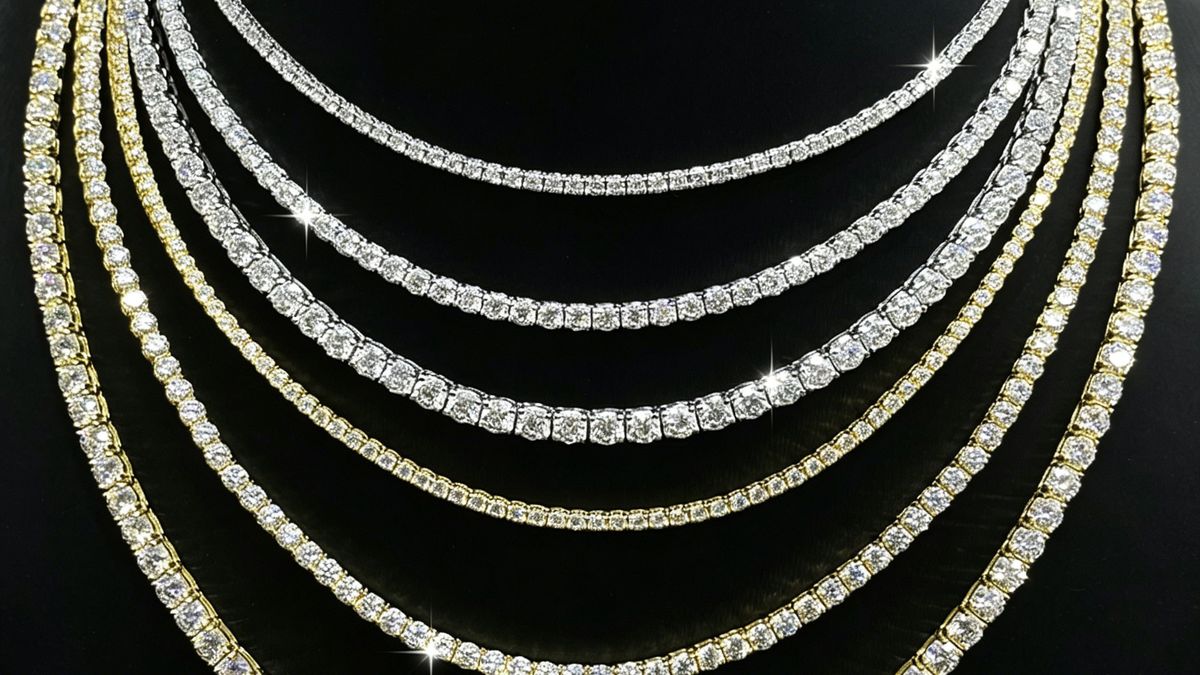
| Tennis chains | $119 – $169 | Long and flexible with many settings, so storage matters more than anything else |
| Rings | $49 – $585 | The highest-friction piece in the catalogue: a ring takes more wear in a month than a chain does in a year |
| Bracelets | $79 – $539 | Worn against the wrist bone; clasps and hinges are where a finish goes first |
| Cuban link chains | $189 – $3,589 | The heaviest silver surface we sell — the finish is doing the most work of anywhere in the range |
| Pendants | $29 – $1,749 | The bail and the chain rub against each other every time you move |
| Iced-out watches | $321 – $1,599 | Case and bracelet are both finished surfaces, worn against skin and cuffs all day |
| Grillz | $411 – $1,096 | Made to your own mould — the most contact-heavy piece in the catalogue |
Prices in this table are our own selling prices — what you pay — read from the NOVAE ATELIER catalogue as of 13 September 2026 and quoted in USD. Chain pricing by width and stone size is broken out in How Much Does a Custom Moissanite Cuban Chain Cost?
Frequently asked questions
Does moissanite tarnish?
No. Moissanite is silicon carbide — a crystal, not a metal — and tarnish is a reaction that happens on metal surfaces. There is nothing on the stone for sulfur to react with. The silver it is set in is a different matter, and the two questions usually get mixed up.
Does 925 sterling silver tarnish?
Yes, eventually. Tarnish is a reaction between silver and sulfur, and it speeds up with humidity, air pollution, sweat, cosmetics and chlorine. The copper in a 925 alloy is the reactive part, which is also why a bare silver ring can leave a green mark on some people.
How long does gold plating last on jewelry?
Guidance from jewelry retailers and insurers puts plating on everyday pieces at roughly six to eighteen months before re-plating, and less on rings, which take the most friction. How long it lasts depends on wear and care rather than a fixed clock. It is also the reason we describe our finishes as plated, not permanent.
Can I shower or swim with moissanite jewelry?
The stone, yes — water does nothing to silicon carbide. The finish and the silver are what you are protecting. GIA advises removing fine jewelry before a chlorinated swimming pool, and Jewelers Mutual advises removing silver jewelry before showering, swimming or doing dishes. Soap, chlorine and salt are where the shine actually goes.
Does moissanite get cloudy over time?
Not permanently. What looks like cloudiness is a film of skin oil, hand cream, soap and sunscreen sitting on the surface, and it washes off with warm water, mild dish soap and a soft brush. The crystal underneath has no way to become hazy from the inside.
Will moissanite turn my neck or finger green?
The stone cannot, because it is not a metal. A bare 925 sterling silver piece can leave a temporary green mark on some people, because of the copper in the alloy, and a plated piece built on a base metal such as brass will turn skin green once the plating has worn through. Our jewelry is built on 925 sterling silver, and a rhodium finish reduces how much metal touches the skin.
How much does moissanite jewelry cost in 2026?
From the NOVAE workshop in September 2026: stud earrings $29-$159, tennis chains $119-$169, rings $49-$585, bracelets $79-$539, Cuban link chains $189-$3,589, pendants $29-$1,749, iced-out watches $321-$1,599 and grillz $411-$1,096. These are our selling prices as of 13 September 2026.
Not sure which finish to order?
Tell us how you wear your jewelry — every day, weekends, gym, showers — and we will tell you which finish we would put on the piece ourselves, and what it costs. If you already own a piece from us and the finish has dulled, send a photo and we will tell you whether it needs a clean or a re-plate.
Ask on WhatsAppSources: US Federal Trade Commission jewelry guides, 16 CFR § 23.4(b) (thickness standard for gold over sterling silver, quoted directly), § 23.5(b)(2) (silver content, quoted directly) and § 23.7 (disclosure of a rhodium surface layer, quoted directly); Gemological Institute of America, “Tips on Caring for Jewelry,” 10 December 2015 (cleaning method, chlorinated pools, chlorine bleach and gold alloys, ultrasonic cautions, anti-tarnish storage, six-month check); Jewelers Mutual, “Does sterling silver tarnish?” (17 September 2024), “What is Rhodium Plating? All You Need to Know!” (22 May 2024) and “How to Store Jewelry” (22 July 2026) (tarnish chemistry, sulfur sources, water and chlorine, green discoloration, plating wear, polishing advice, airtight storage and anti-tarnish strips); Kurt Nassau, “Synthetic moissanite: A new man-made jewel,” Current Science Vol. 79 No. 11, 10 December 2000 (hardness, cleavage, chemical and thermal stability, quoted directly); Cullen Jewellery, moissanite care guidance, 17 December 2025 (cloudiness, quoted directly); Keyzar, “Does Moissanite Get Cloudy Over Time?”, 24 April 2022. Plating-lifespan figures are retailer and trade guidance, not laboratory measurements, and are attributed as such above. Prices are our own catalogue figures as of 13 September 2026 in USD. This page describes how the materials in our jewelry behave; it is not a warranty, and normal wear is normal.